Language

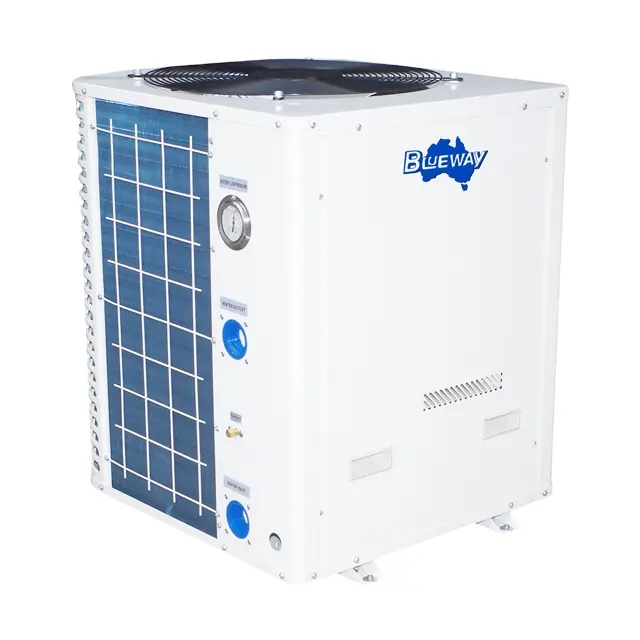
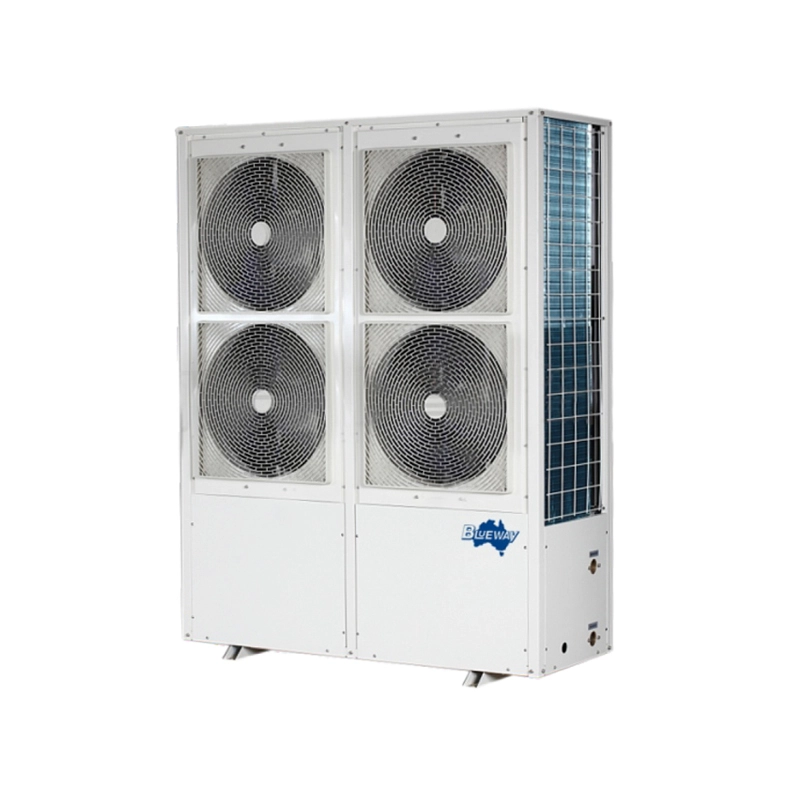
This model is part of Blueway’s High Temperature Heat Pump series, supported by our Customized HVAC Fabrication capability.
Water boils at 100°C at atmospheric pressure. At 90°C, you are operating only ten degrees below that threshold — and this changes almost everything about how the system must be designed, installed and protected.
This is not simply a matter of "a bit hotter than 80°C." At 90°C, the engineering environment shifts in several fundamental ways:
A heat pump that reaches 90°C in a test laboratory is not the same as a system that operates reliably at 90°C in an industrial plant for years. This product is engineered for the latter.
| Design Aspect | At 80°C | At 90°C |
|---|---|---|
| System pressure | Moderate pressurization | Higher pressure required to prevent flashing |
| Scaling risk | Manageable with standard water treatment | Aggressive — enhanced water treatment essential |
| Pipe and seal materials | Standard high-temp materials acceptable | Must be rated for 90°C+ continuous service |
| Pump selection | Standard hot water circulator | NPSH-critical, cavitation-resistant pump required |
| Insulation | Standard thickness | Increased thickness to limit heat loss |
| Safety protection | Standard over-temperature cutout | Multi-layer protection, scald prevention, pressure relief |
| Applicable processes | Most industrial hot water, DHW disinfection | Sterilization, pasteurization, low-pressure steam replacement |
Understanding this difference is the reason we treat 90°C projects as system engineering engagements rather than straightforward equipment sales.
Food, beverage, dairy and pharmaceutical processes frequently require 85–90°C water for sterilization, pasteurization and clean-in-place cycles. Lower-temperature heat pumps cannot meet these requirements, and direct steam injection is often impractical or energy-intensive.
Many facilities use low-pressure steam (typically 0.5–1 bar) for process heating. The corresponding saturated water temperature falls in the 90–100°C range. A 90°C heat pump can replace a significant portion of this steam demand without the boiler, the fuel supply, the flue, or the steam distribution losses.
Surface treatment, degreasing, parts washing and sterilization tunnels in manufacturing often specify 85–90°C. Meeting this with a heat pump instead of electric resistance heating can significantly reduce energy cost.
Dyeing, bleaching, scouring and certain chemical reactions require water close to boiling. Heat pump supply at 90°C can serve these processes directly or as a pre-heat stage.
Older district heating networks were designed around boiler supply temperatures. A 90°C heat pump can feed these networks without requiring a full network temperature reduction — which is often the single biggest barrier to heat pump adoption in existing district heating systems.
Certain absorption chillers require driving heat in the 85–95°C range. A 90°C heat pump can supply this heat, enabling combined heating and cooling from a single high-temperature source.
All values are typical and for reference only. Final specifications depend on the confirmed datasheet and project requirements. High-temperature systems require project-specific engineering review.
A 90°C heat pump is one part of a system. The following elements must be correctly designed for reliable operation:
Blueway provides system design support for 90°C projects, including schematic development, equipment selection and control strategy.
Is 90°C safe to use in an industrial plant?
Yes, when the system is designed correctly. At 90°C, pressurization, water treatment, material
selection and safety protection become critical design elements. We review each project
individually and provide system-level guidance, not just equipment supply.
Can the unit reach 90°C in cold ambient conditions?
90°C outlet temperature is achievable within the unit’s designed operating envelope. Capacity
and efficiency vary with ambient and inlet water temperature. Please share your site conditions
so we can confirm the correct configuration.
How is scaling handled at 90°C?
Scale formation is significantly more aggressive at 90°C than at lower temperatures. Water
treatment is essential, and heat exchanger design must account for high-temperature operation.
We can advise on water quality requirements during project review.
Which refrigerant is used?
Depending on model and temperature range, R290, R134a or R513A may be used. We will recommend
the most suitable option based on your application, market and local regulations.
Can it replace a low-pressure steam system?
In many cases, a 90°C heat pump can replace a significant portion of low-pressure steam demand,
particularly where the required process temperature falls in the 85–95°C range. The feasibility
depends on your specific process, load profile and existing steam distribution system.
Can multiple units be combined for higher capacity?
Yes. Cascade control allows multiple units to operate as a single plant, providing both capacity
and redundancy.
Do you support OEM / ODM and system design?
Yes. Blueway provides OEM, OBM and ODM services with customized branding, capacity, voltage,
refrigerant and control logic, together with system design support for high-temperature
projects.
For standard domestic and commercial hot water, see our Hot Water Heat Pump range. For combined heating and cooling in residential and light commercial buildings, view the Heating Cooling Heat Pump series.
For applications requiring customized high-temperature system design, explore our Customized HVAC Fabrication capability, or browse the full Products overview.
Blueway was founded in 1993. Our manufacturing center is located in Shunde, Foshan, Guangdong, China, focusing on the HVAC industry and integrated energy-saving solutions. Over 30 years, Blueway has supplied and exported heating and cooling systems to more than 40 countries and regions, serving hotels, engineering companies and industrial projects.
Tell us your required process temperature, flow rate, existing heat source and site conditions — we will come back with a matched 90°C Heat Pump solution and system design recommendation.




Teams