Products

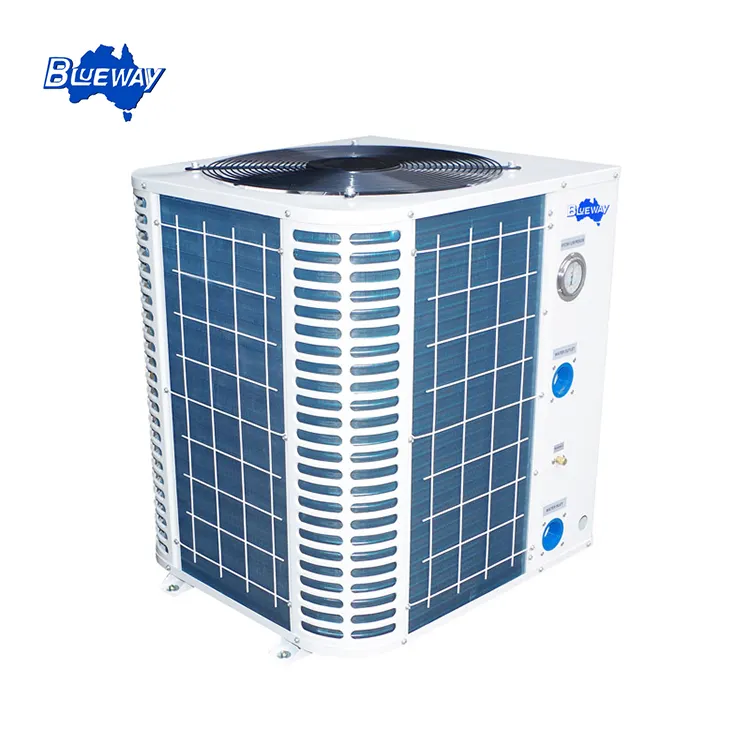
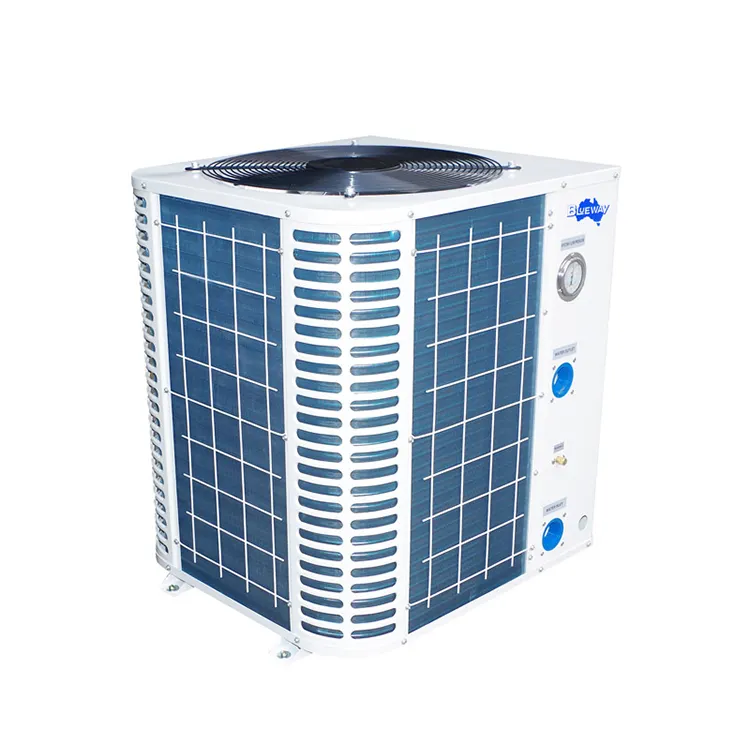
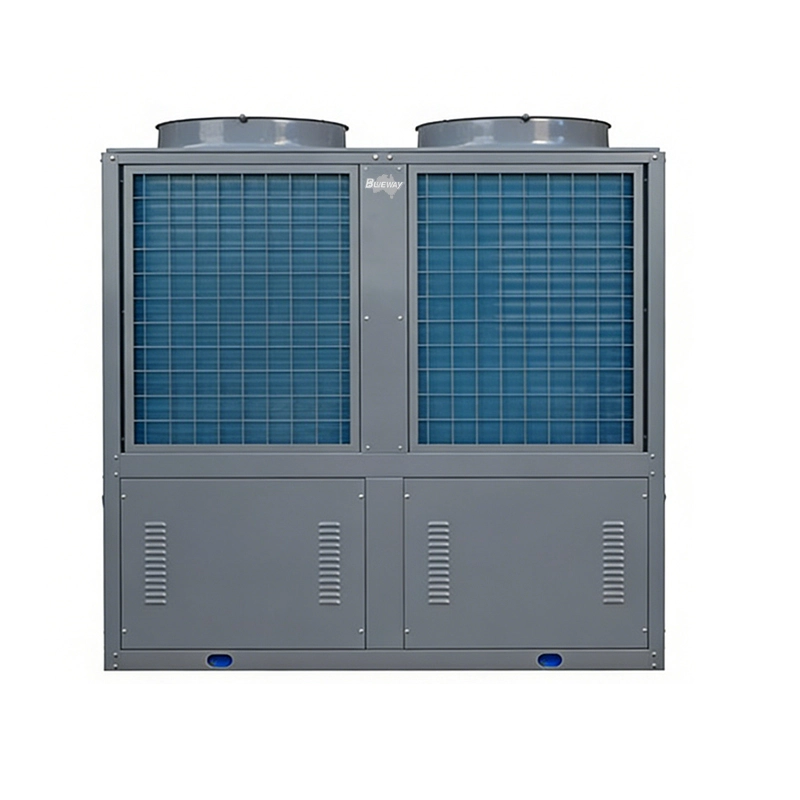
Air and Water Cooled Condensing Units

Quick Overview

Product Type
Condensing units for refrigeration, cold storage, process cooling and HVAC systems
Cooling Method
Air-cooled or water-cooled, selected by site conditions
Typical Refrigerant
R404A / R507A / R134a / R410A / R290 / R744, project dependent
Capacity Range
Small commercial units through to large industrial installations, modular and cascade options
Core Applications
Cold rooms, blast freezers, walk-in coolers, food processing, industrial process cooling, HVAC systems
Customization
OEM / ODM, compressor brand, refrigerant, voltage, capacity, control interface, enclosure design

This product range belongs to Blueway’s Customized HVAC Fabrication capability, alongside our broader refrigeration and cooling equipment portfolio.

The First Decision: Air-Cooled or Water-Cooled?

A condensing unit is a compressor, condenser, controls and receiver assembled into one package. The difference between air-cooled and water-cooled versions is where the heat goes — into the surrounding air, or into a water loop that carries it away.

This single decision affects equipment cost, installation cost, operating cost, noise level, maintenance requirements, and how the whole facility is laid out. In practice, choosing incorrectly is one of the most common and most expensive mistakes in refrigeration system design.

The table below shows how the two options differ in real projects.

Air-Cooled vs. Water-Cooled: Direct Comparison

Design Factor Air-Cooled Condensing Unit Water-Cooled Condensing Unit
Heat rejection To ambient air via fin-and-tube condenser and fan To water via shell-and-tube or plate condenser
Condensing temperature Follows ambient — rises in hot weather Stable, set by cooling water temperature
Efficiency in hot climate Reduced — capacity and COP drop as ambient rises Maintained — largely independent of outdoor air
Water requirement None Cooling tower, chiller loop or municipal water supply
Installation complexity Simpler — no water circuit Higher — piping, pumps, tower or loop required
Space requirement Larger footprint, needs airflow clearance Compact unit, but needs plant room and tower space
Noise Higher — condenser fan is a main noise source Lower at the unit — noise moves to the cooling tower
Maintenance Coil cleaning, fan and motor checks Water treatment, scaling and fouling control, pump service
Corrosion exposure Direct — coil exposed to weather and airborne contaminants Lower at the condenser — protected inside the water circuit
Best suited to Sites without water infrastructure, mild to moderate climate, distributed installations Large capacity, hot climate, indoor plant rooms, noise-sensitive sites
Typical applications Small cold rooms, retail refrigeration, small process cooling Industrial refrigeration, large cold storage, district cooling, process plants

Neither option is universally better. The correct choice depends on climate, capacity, water availability, noise limits, space and maintenance capability — which is why we review each project individually before recommending a configuration.

How to Choose for Your Project

Choose Air-Cooled When

  • The site has no cooling water supply or cooling tower, and installing one is not practical
  • Capacity is small to moderate, and the installation is distributed across multiple locations
  • Outdoor ambient temperatures are moderate, so the efficiency penalty in summer is limited
  • Installation speed matters more than peak efficiency — no water circuit means faster commissioning
  • The unit will be installed outdoors or in a well-ventilated plant area with adequate airflow clearance
  • Maintenance resources are limited and a simpler system is preferred

Choose Water-Cooled When

  • Capacity is large enough that efficiency difference materially affects operating cost
  • Ambient temperatures are high, and air-cooled units would lose too much capacity in peak summer
  • The site already has a cooling tower, chiller loop, or process water circuit available
  • Indoor plant room installation is required, or space for air-cooled units is not available
  • Noise restrictions make outdoor condenser fans impractical
  • Stable condensing temperature is important for process consistency
  • Water treatment capability exists or can be outsourced reliably

Consider a Hybrid or Modular Approach When

  • Load varies significantly between seasons, and part-load efficiency is a priority
  • Redundancy is required for critical refrigeration — multiple units provide backup
  • Future expansion is expected, and phased installation is preferred
  • The project has both air-cooled and water-cooled zones with different requirements

Core Configurations

Compressor Options

  • Hermetic, semi-hermetic and scroll compressor options
  • Single or multi-compressor configurations
  • Fixed-speed or inverter-driven, depending on load profile
  • Compressor brand selected by project requirement and service network

Condenser Options

  • Air-cooled: fin-and-tube coil, copper tube with aluminum or copper fins
  • Water-cooled: shell-and-tube or plate heat exchanger
  • Coil coating options for coastal and corrosive environments
  • EC fan options for reduced energy consumption and noise

Refrigerant Options

  • R404A / R507A for low and medium temperature refrigeration
  • R134a for medium temperature and process cooling
  • R410A for air conditioning applications
  • R290 and R744 for low-GWP project requirements

Electrical & Control

  • 380-415V / 3Ph / 50Hz standard; other voltages and 60Hz available
  • Electromechanical or electronic controller options
  • RS485 Modbus, BMS and remote monitoring options
  • Alarm output and fault diagnostics

Protection & Safety

  • High and low pressure protection
  • Over-current, overheat and phase-failure protection
  • Oil level and discharge temperature control
  • Anti-frost and defrost control for low-temperature applications

Construction

  • Powder-coated steel enclosure with corrosion protection options
  • Weatherproof housing for outdoor installation
  • Service-friendly layout with accessible components
  • Custom enclosure dimensions for OEM integration

All configurations are project-specific. Final specifications depend on the confirmed datasheet, refrigerant selection and site requirements.

Application Matching

Application Typical Configuration
Small cold room, retail or restaurant Air-cooled, single hermetic compressor, medium temperature
Walk-in cooler and freezer combination Air-cooled, dual-compressor or two separate units
Blast freezer Air-cooled or water-cooled, low temperature, high capacity, defrost control
Large cold storage warehouse Water-cooled, multi-compressor, cascade or two-stage system
Food processing plant Water-cooled, semi-hermetic, continuous duty, hygienic enclosure options
Industrial process cooling Water-cooled, stable condensing temperature, BMS integration
Supermarket refrigeration rack Air-cooled or water-cooled, multi-compressor, inverter modulation
Hot climate installation Water-cooled preferred, or air-cooled with high-ambient configuration
Coastal or corrosive environment Corrosion-protected coil and enclosure, or water-cooled to isolate condenser
OEM equipment integration Custom dimensions, refrigerant and control interface to match host equipment

Selection Factors We Review With You

  1. Refrigeration load and temperature — required evaporating temperature, cooling capacity, and whether the application is low, medium or high temperature.
  2. Site climate — maximum summer ambient temperature, minimum winter temperature, and seasonal variation.
  3. Water availability and quality — whether a cooling tower or water loop exists, and what water treatment is in place.
  4. Installation location — outdoor, indoor plant room, rooftop, or integrated into a larger equipment package.
  5. Noise constraints — nearby residential or commercial areas, and applicable noise limits.
  6. Electrical supply — voltage, frequency, phase and available capacity.
  7. Refrigerant preference — based on local regulations, existing systems and service availability.
  8. Control and integration — whether the unit must communicate with a BMS, SCADA, or the host equipment controller.
  9. Redundancy requirement — whether the application can tolerate downtime, and whether multiple units are needed.
  10. Maintenance capability — what level of service support is available on site.

Frequently Asked Questions

Which type should I choose if I am not sure?
Share your site conditions, cooling load, ambient temperature range and whether cooling water is available. We will recommend a configuration based on your actual project rather than a general rule of thumb.

Can an air-cooled unit be converted to water-cooled later?
Not directly. The condenser, piping and control logic differ between the two types. If there is a possibility of switching to water cooling in the future, this should be considered during initial system design.

How much does ambient temperature affect an air-cooled unit?
Air-cooled condensing units lose capacity and efficiency as ambient temperature rises, because the condensing temperature follows the outdoor air. The exact effect depends on the refrigerant, compressor and coil design. For projects with high summer temperatures, we can propose high-ambient configurations or recommend a water-cooled solution.

What maintenance does a water-cooled unit require?
Water-cooled units require water treatment to control scaling, corrosion and biological growth, plus periodic inspection of the heat exchanger, pumps and cooling tower. Compared with air-cooled units, the maintenance scope is broader but the condenser itself is protected from outdoor contamination.

Can you supply units for OEM integration?
Yes. We can customize dimensions, compressor selection, refrigerant, electrical configuration, control interface and enclosure design to match your host equipment. Drawings are issued for approval before production.

Are low-GWP refrigerant options available?
Yes. Depending on the application and capacity, R290 and R744 options can be discussed alongside conventional refrigerants. Suitability depends on charge size, safety requirements and local regulations.

What is the typical delivery and documentation?
Delivery depends on configuration and quantity. Standard documentation includes dimensional drawings, wiring diagrams, technical datasheet and operation manual. Additional documentation can be provided for project requirements.

Do you support OEM / ODM?
Yes. Blueway provides OEM, OBM and ODM services with customized branding, capacity, voltage, refrigerant, control logic and enclosure design.

Other Products in This Family

For air conditioning applications, see our Commercial Air Conditioner range. For high-temperature process heating, view the High Temperature Heat Pump series, and for large-capacity industrial cooling, the Evaporative Condensing Chiller.

For customized system design and equipment fabrication, explore our Customized HVAC Fabrication capability, or browse the full Products overview.

About Blueway

Blueway was founded in 1993. Our manufacturing center is located in Shunde, Foshan, Guangdong, China, focusing on the HVAC industry and integrated energy-saving solutions. Over 30 years, Blueway has supplied and exported heating and cooling systems to more than 40 countries and regions, serving hotels, engineering companies and industrial projects.

Start Your Project

Tell us your cooling load, temperature requirement, site conditions and whether cooling water is available — we will come back with a matched air-cooled or water-cooled condensing unit recommendation.

Send Inquiry | Contact Us

Hot Products

  • Heat Pump Water Heater

    Heat Pump Water Heater

    Blueway high quality Heat Pump Water Heater can directly reach the desired water temperature by adopting variable flow rate control technology, featured with tube in tube water heat exchanger, water flow control valve & automatic defrosting function, saving over 2/3 energy than conventional electric water heater.
  • EVI Air Source Heat Pump

    EVI Air Source Heat Pump

    As a professional air source heat pump manufacturer in China, Blueway offers the advanced EVI Air Source Heat Pump, designed to deliver exceptional heating performance even in extreme winter conditions. Our factory in Shunde, Foshan, combines DC inverter technology with Enhanced Vapor Injection (EVI) to provide a highly efficient heating solution for residential and commercial applications.
  • Industrial Swimming Pool Water Heater

    Industrial Swimming Pool Water Heater

    As a professional high quality Industrial Swimming Pool Water Heater manufacturer, you can rest assured to buy PT Door from our factory.
  • R417a Cool Refrigerant Power Heat Pump

    R417a Cool Refrigerant Power Heat Pump

    As the professional manufacturer, we would like to provide you high quality R417a Cool Refrigerant Power Heat Pump.This product is very safe, with a design that completely isolates the water source from the power supply, so there is no need to worry about electric shock.
  • R410A Air Source DC Inverter Swimming Pool Heat Pump

    R410A Air Source DC Inverter Swimming Pool Heat Pump

    BLUEWAY R410A Air Source DC Inverter Swimming Pool Heat Pumps are designed and manufactured for water temperature control in pools and spas. Pool heat pump units can be used as coolers in the summer and as heat pumps in other seasons, providing the most energy-efficient pool and spa cooling and heating.
  • Inverter Pool Heat Pump

    Inverter Pool Heat Pump

    Blueway high quality Inverter Pool Heat Pump with oustanding full inverter technology, which full inverter control system controls the compressor and fan motor speed to reach optimized performance. Equipped with titanium tube-in-shell heat exchanger, R32 or R410a refrigerant, intelligent touch screen controller, optional WIFI app control function. Especially T3 Series can work up to 53℃ in gulf area, like UAE, Qatar, Oman, Kuwait, etc.

Send Inquiry

X
We use cookies to offer you a better browsing experience, analyze site traffic and personalize content. By using this site, you agree to our use of cookies. Privacy Policy
RejectAccept