Language

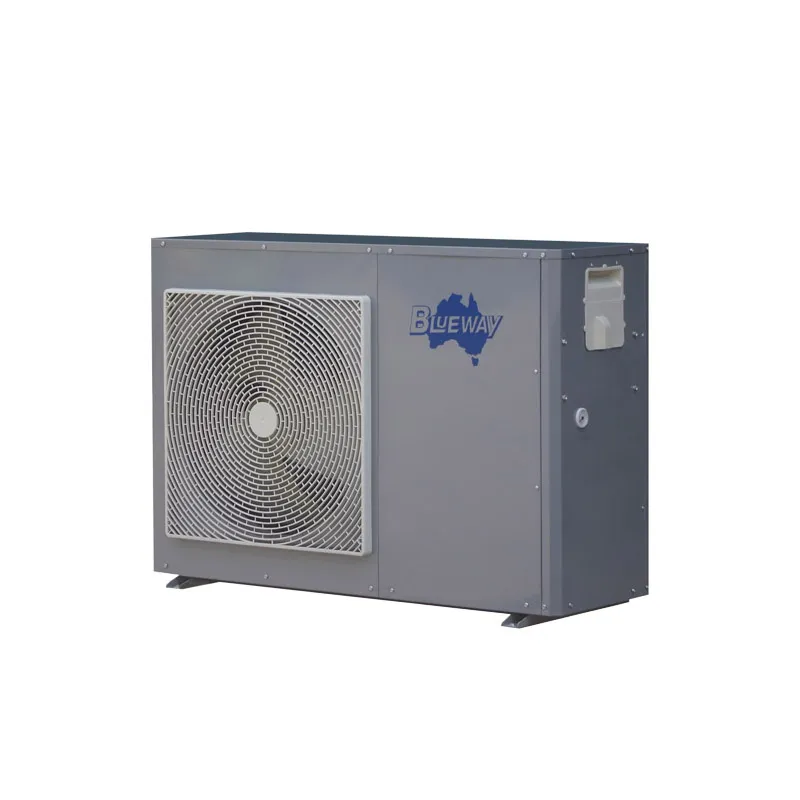
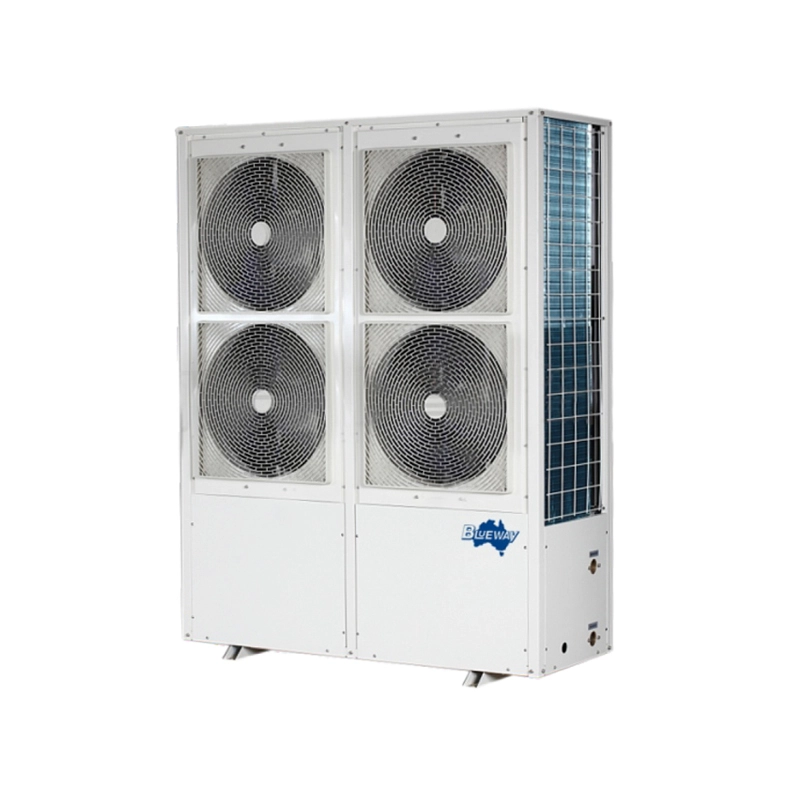
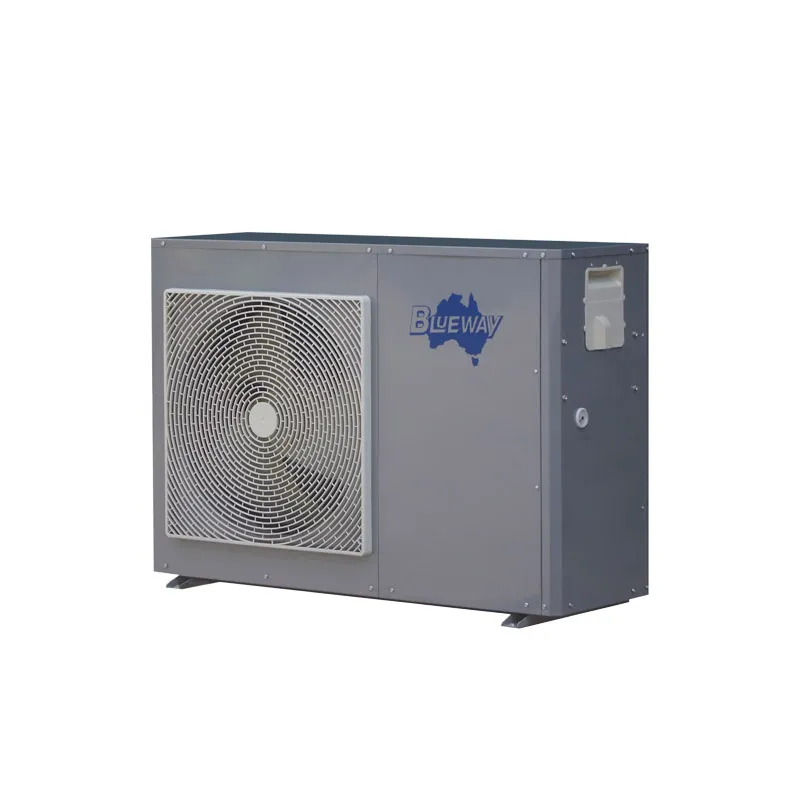
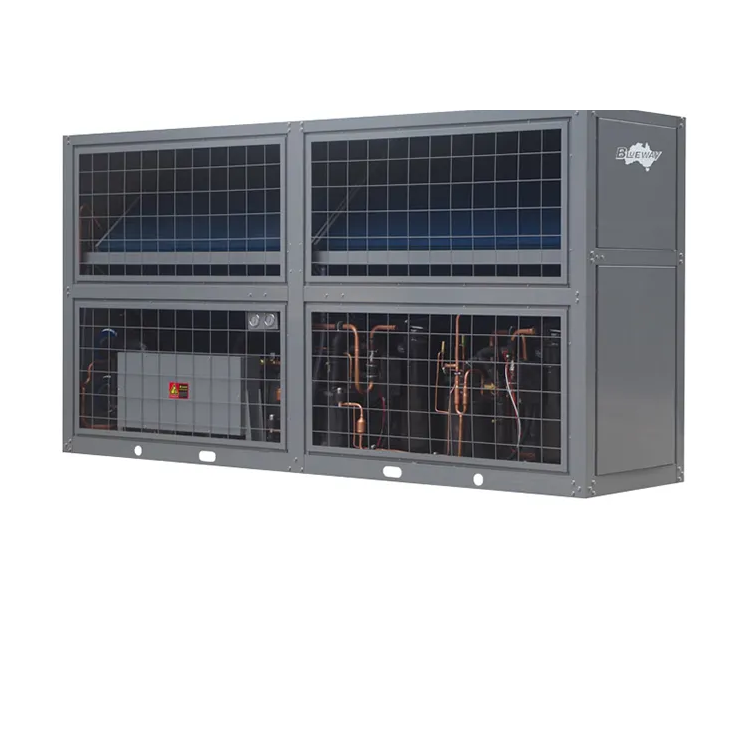
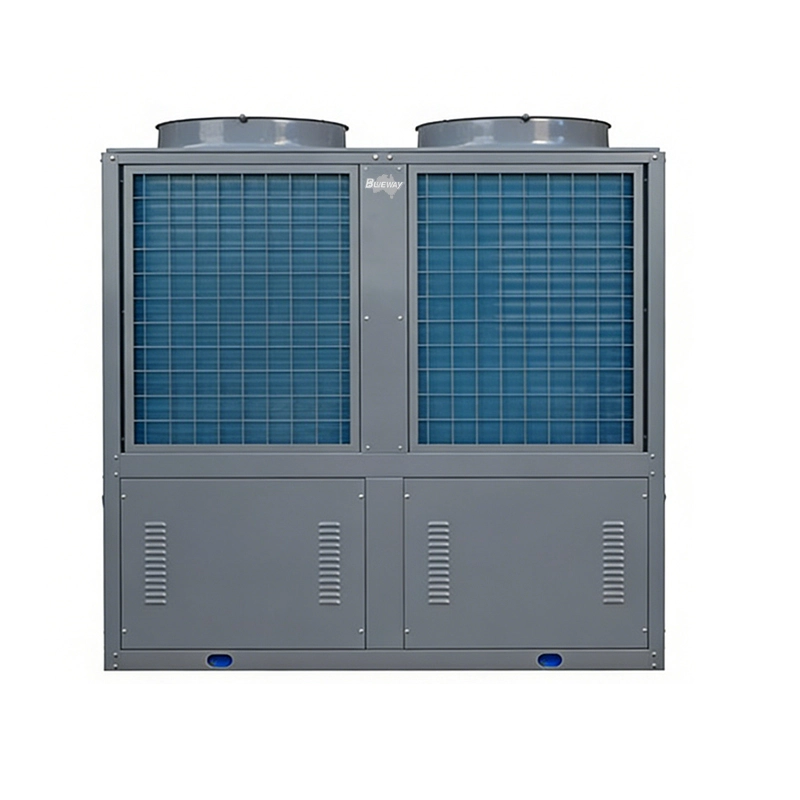
This model belongs to Blueway’s High Temperature Heat Pump series, developed under our Customized HVAC Fabrication capability.
Anyone can push a heat pump to a higher outlet temperature. The difficult part is doing it without destroying efficiency.
As the required outlet temperature rises, the compressor must work against a larger pressure ratio. Discharge temperature climbs, compression losses increase, and COP drops. In many high-temperature heat pumps, the efficiency penalty is severe — sometimes so severe that the operating cost advantage over a boiler nearly disappears.
That is the problem this product is designed to solve. The 85°C High COP Heat Pump delivers high-temperature output while keeping the efficiency loss under control, so the economic case for replacing a boiler stays intact.
Vapor injection improves compressor performance at high pressure ratios by cooling the compression process and increasing refrigerant mass flow. The result is higher capacity and better COP at high condensing temperatures — exactly the operating range where conventional heat pumps struggle most.
The compressor is selected for the high-temperature envelope, not adapted from a standard model. Discharge temperature control, lubrication and internal cooling are all engineered for continuous high-temperature operation.
Larger heat transfer area and optimized refrigerant distribution reduce the temperature difference between refrigerant and water, which directly improves COP at high outlet temperatures.
The unit modulates output to match actual load instead of running at fixed full capacity. This avoids unnecessary high-temperature operation during low-demand periods and raises seasonal efficiency.
In cold ambient conditions, defrost cycles can waste significant energy. Demand-based defrost logic reduces unnecessary defrost cycles and keeps average COP higher through the heating season.
| Application | Why High COP Matters Here |
|---|---|
| Food and beverage sanitization / CIP | Daily high-temperature cleaning cycles — small COP gains compound into large annual savings |
| Pharmaceutical and biotech process heating | Continuous operation makes efficiency the dominant lifecycle cost |
| Textile dyeing and finishing | High-temp water used in large volumes, often around the clock |
| Hotel / hospital DHW with thermal disinfection | Regular 80°C+ cycles combined with daily hot water demand |
| Boiler retrofit in existing buildings | Retains existing high-temperature pipework while cutting energy cost |
| District heating with high supply temperature | Large-scale continuous load, where COP directly determines feasibility |
| Industrial washing and surface treatment | Multi-shift operation with high annual running hours |
| Greenhouse and agricultural processing | Seasonal high demand with sensitivity to operating cost |
In every one of these cases, the unit runs for thousands of hours per year. A COP difference of even a few percent translates into a significant cost difference over the equipment lifetime.
All values are typical and for reference only. Final specifications depend on the confirmed datasheet and project requirements.
The purchase price of a heat pump is only part of the story. For high-temperature industrial applications, the numbers that matter most are:
When these factors are combined, the difference between a standard high-temperature heat pump and a high COP model becomes a long-term financial decision, not just a technical one. We recommend evaluating the unit on total cost of ownership rather than purchase price alone.
What makes this different from a standard high-temperature heat pump?
The main difference is COP performance at high outlet temperatures. Standard high-temperature
units often accept a large efficiency penalty to reach 80°C or above. This model is engineered
to maintain higher efficiency across that range, which directly reduces operating cost in
continuous industrial applications.
How much higher is the COP compared with a conventional unit?
The improvement depends on the specific operating conditions — outlet temperature, ambient
temperature and load profile. We recommend sharing your project data so we can provide a
realistic performance estimate rather than a general figure.
Is 85°C achievable in cold ambient conditions?
85°C outlet temperature is achievable within the unit’s designed operating envelope. Capacity
and COP will vary with ambient and inlet water temperature. For cold-climate projects, please
share your site conditions so we can confirm the correct configuration.
Which refrigerant is used?
Depending on the model and temperature range, R290, R134a or R513A may be used. We will
recommend the most suitable option based on your application, market requirements and
local regulations.
Can it fully replace an existing boiler?
In many cases yes, and in others the heat pump becomes the primary heat source with the boiler
retained for peak demand or backup. The right approach depends on your load profile and the
temperature levels required by your process.
Can multiple units be combined?
Yes. Cascade control allows multiple units to operate as a single plant, which also provides
redundancy and staged capacity matching.
Do you support OEM / ODM?
Yes. Blueway provides OEM, OBM and ODM services with customized branding, capacity, voltage,
refrigerant, control logic and cabinet design.
For standard hot water applications, see our Hot Water Heat Pump range. For combined heating and cooling in residential and light commercial buildings, view the Heating Cooling Heat Pump series.
For projects requiring customized high-temperature system design, explore our Customized HVAC Fabrication capability, or browse the full Products overview.
Blueway was founded in 1993. Our manufacturing center is located in Shunde, Foshan, Guangdong, China, focusing on the HVAC industry and integrated energy-saving solutions. Over 30 years, Blueway has supplied and exported heating and cooling systems to more than 40 countries and regions, serving hotels, engineering companies and industrial projects.
Tell us your required outlet temperature, annual running hours, load profile and site conditions — we will come back with a matched 85°C High COP Heat Pump solution.


Teams