Language

Modern buildings demand energy-efficient, environmentally friendly, and cost-effective climate solutions. Traditional heating and cooling systems often rely on fossil fuels or consume large amounts of electricity, which increases operational costs and environmental impact. This is where Water to Water Heat Pump technology becomes an attractive solution. By transferring heat between water sources rather than generating it directly, this technology significantly improves energy efficiency while reducing emissions and long-term costs.
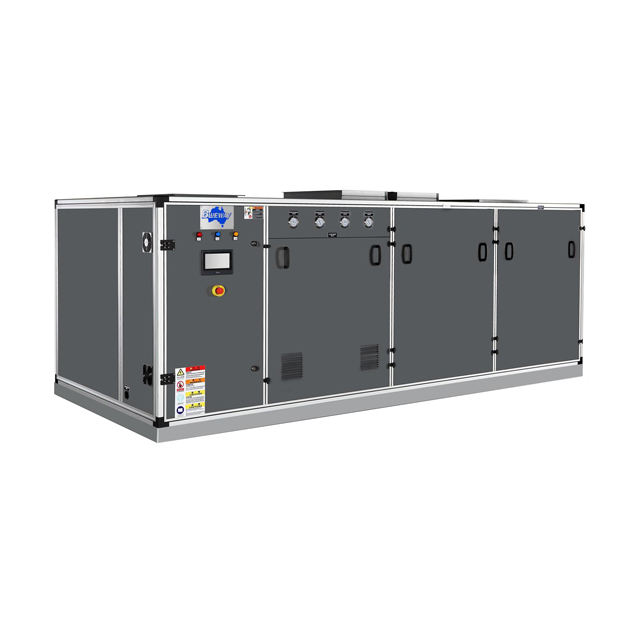
A Water to Water Heat Pump extracts heat from a water source such as groundwater, lakes, or a closed-loop water system and transfers that energy to provide heating or cooling for buildings. Compared with conventional HVAC systems, it can achieve higher efficiency levels, stable performance, and long service life. Manufacturers such as Foshan Blueway Electric Appliances Co., Ltd. have developed advanced water-source heat pump technologies designed to meet the needs of residential, commercial, and industrial applications.
In this comprehensive guide, we will explore how Water to Water Heat Pumps work, their advantages, applications, installation considerations, and how they help businesses and homeowners reduce energy consumption while maintaining superior indoor comfort.

Water to Water Heat Pumps represent one of the most efficient HVAC technologies available today. They use water as the heat exchange medium to deliver reliable heating and cooling while consuming significantly less energy than traditional systems. This article explains the working principles, key components, advantages, real-world applications, and factors to consider when choosing a Water to Water Heat Pump system. It also answers common questions customers have when considering this solution.
A Water to Water Heat Pump is a highly efficient heating and cooling system that transfers thermal energy between two water circuits. Instead of generating heat through combustion or electric resistance, it moves heat from one place to another using refrigeration technology.
This system is commonly connected to underground water sources, geothermal loops, or industrial water systems. Because water maintains a more stable temperature than air, Water to Water Heat Pumps operate more efficiently throughout the year.
Companies such as Foshan Blueway Electric Appliances Co., Ltd. specialize in designing advanced heat pump solutions that integrate high-performance compressors, intelligent controls, and durable heat exchangers to ensure reliable operation even under demanding conditions.
The working principle of a Water to Water Heat Pump is based on heat transfer through a refrigeration cycle. The system captures heat from a water source and transfers it to another water circuit used for heating or cooling.
The typical process includes four key steps:
This closed-loop cycle allows the system to efficiently move heat rather than produce it, which dramatically reduces energy consumption.
Understanding the major components of the system helps customers evaluate performance, reliability, and installation requirements.
| Component | Function |
|---|---|
| Compressor | Pressurizes refrigerant and increases temperature |
| Evaporator | Absorbs heat from the source water |
| Condenser | Transfers heat to the building’s water system |
| Expansion Valve | Controls refrigerant pressure and flow |
| Control System | Monitors temperature, pressure, and system operation |
High-quality systems manufactured by Foshan Blueway Electric Appliances Co., Ltd. are designed with advanced compressors and corrosion-resistant heat exchangers to ensure durability and optimal performance.
Many customers choose Water to Water Heat Pumps because they address several common HVAC pain points such as high energy costs, inconsistent temperatures, and environmental concerns.
For commercial buildings, these advantages translate into significant long-term savings and improved indoor comfort.
| Feature | Water to Water Heat Pump | Traditional HVAC |
|---|---|---|
| Energy Efficiency | Very high | Moderate |
| Operating Cost | Low | Higher |
| Environmental Impact | Low emissions | Higher emissions |
| Temperature Stability | Very stable | Variable |
| Maintenance | Moderate | Moderate to high |
Advanced systems from Foshan Blueway Electric Appliances Co., Ltd. further improve performance through optimized heat exchanger design and intelligent control technology.
Water to Water Heat Pumps are widely used across different industries due to their versatility and efficiency.
These systems are especially valuable in large buildings where heating and cooling loads are significant.
Proper installation plays a crucial role in achieving the expected efficiency and performance. Before installing a Water to Water Heat Pump, several factors should be evaluated:
Professional system design provided by manufacturers like Foshan Blueway Electric Appliances Co., Ltd. helps ensure optimal performance and long-term reliability.
Water to Water Heat Pumps can achieve efficiency levels significantly higher than traditional systems. This means that a large portion of the heat delivered to the building comes from renewable energy sources such as groundwater or geothermal energy.
As global energy demand increases, energy-efficient technologies like Water to Water Heat Pumps play an important role in reducing environmental impact while maintaining comfort and productivity.
To keep a Water to Water Heat Pump operating efficiently, regular maintenance is recommended.
Systems manufactured by Foshan Blueway Electric Appliances Co., Ltd. are designed for easy maintenance and long-term reliability.
Selecting the right system requires careful evaluation of several factors:
Choosing a reputable manufacturer such as Foshan Blueway Electric Appliances Co., Ltd. ensures that customers receive high-quality equipment, professional support, and customized solutions.
1. Is a Water to Water Heat Pump suitable for residential buildings?
Yes. Many homeowners install these systems for underfloor heating, domestic hot water, and energy-efficient cooling.
2. How efficient is a Water to Water Heat Pump?
These systems can achieve very high efficiency levels because they transfer heat instead of generating it directly.
3. What water sources can be used?
Common sources include groundwater, lakes, rivers, or closed-loop geothermal systems.
4. Are Water to Water Heat Pumps expensive to install?
Initial installation costs may be higher than traditional systems, but long-term energy savings often offset the investment.
5. How long does a Water to Water Heat Pump last?
With proper maintenance, these systems can operate efficiently for 20 years or more.
Water to Water Heat Pumps provide an efficient, sustainable, and cost-effective solution for modern heating and cooling needs. By utilizing stable water temperatures and advanced heat transfer technology, these systems deliver superior performance while reducing energy consumption and environmental impact.
With extensive experience in heat pump technology, Foshan Blueway Electric Appliances Co., Ltd. offers reliable Water to Water Heat Pump solutions designed for residential, commercial, and industrial applications. Their innovative designs, high-quality components, and professional engineering support help customers achieve optimal performance and long-term savings.
If you are looking for an efficient heating and cooling solution for your building or project, contact us today to learn how Foshan Blueway Electric Appliances Co., Ltd. can provide the perfect Water to Water Heat Pump system tailored to your needs.
Teams