Language

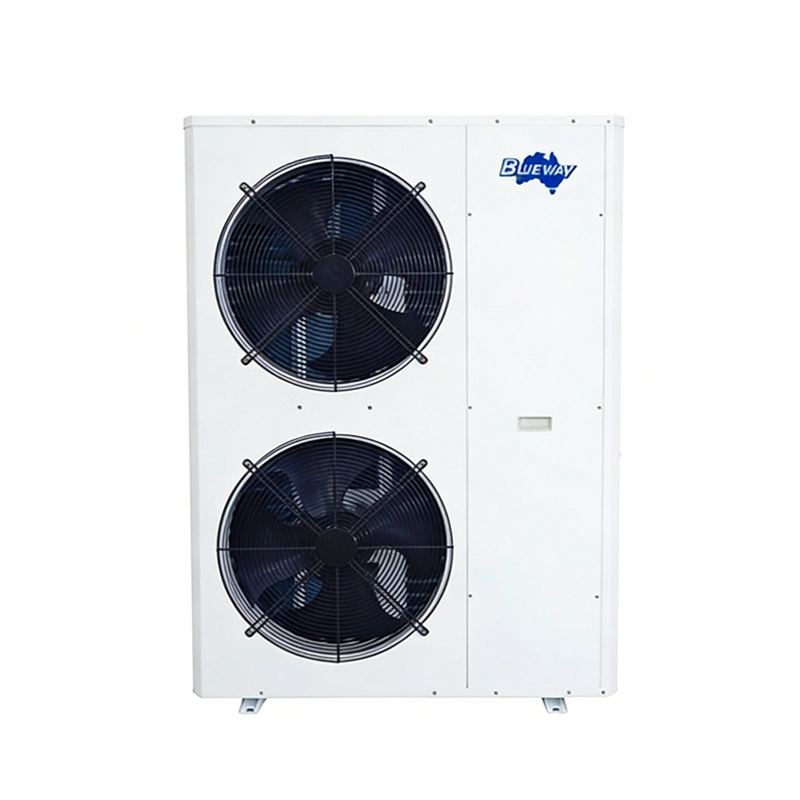
In the engineering construction of hot spring resorts and hot spring hotels, the stability and energy‑saving performance of constant‑temperature systems directly determine long‑term operating costs and user experience. As a targeted energy‑saving solution, hot spring heat pumps have gradually become the preferred equipment in the engineering industry. As a high‑tech enterprise specializing in HVAC and purification fields, Foshan Blueway Electric Appliances Co., Ltd. has attracted wide industry attention for its hot spring heat pumps supported by multiple national patented technologies and multi‑scenario application experience.
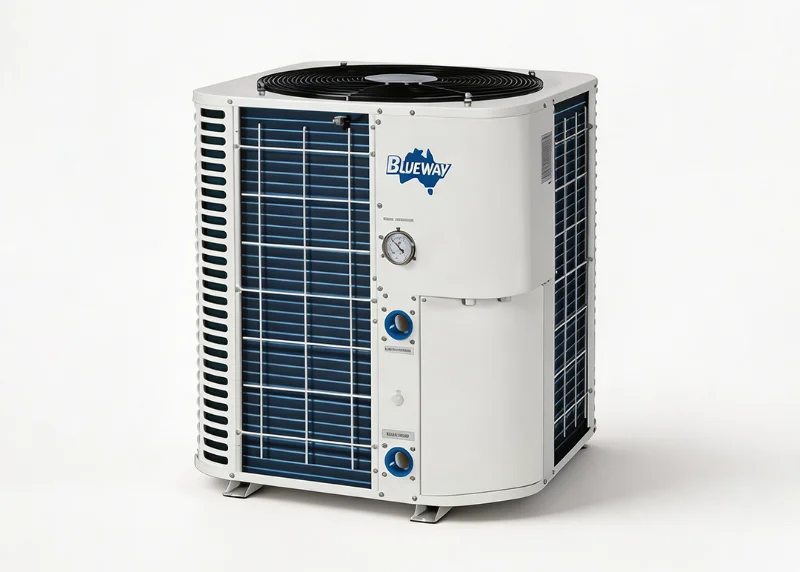
Many engineering practitioners know that hot spring heat pumps maintain constant hot‑spring water temperature, yet lack clear understanding of their core working principles. Simply put, hot spring heat pumps use dedicated compressors to absorb low‑grade heat from ambient air. Heat is compressed and converted into high‑grade thermal energy, which is transferred to hot‑spring water through heat exchangers to sustain stable water temperature. Essentially, the process transfers energy instead of generating heat, without burning traditional fuels.
This technical logic defines two key prerequisites for applicable scenarios. First, stable air heat source supply, such as open or semi‑open hot‑spring venues that can continuously draw heat from ambient air. Second, strict control over water‑temperature fluctuation. Hot‑spring facilities need to keep water temperature steadily between 38℃‑42℃ to avoid noticeable temperature differences that impair user comfort.
Different from ordinary pool heat pumps, hot spring heat pumps must handle higher water‑temperature requirements. This sets far higher standards for compressor high‑temperature resistance and heat‑exchanger corrosion resistance, which serves as one critical distinction between professional brand‑name equipment and non‑standard unbranded products.
Project managers of hot‑spring facilities should not make purchasing decisions merely based on price. Three core performance indicators must be clarified. The first is constant‑temperature precision. Water‑temperature fluctuation shall be controlled within ±0.5℃. Otherwise, users will perceive obvious temperature deviations, which may trigger complaints and damage venue reputation.
The second is corrosion resistance. Hot‑spring water contains various minerals and trace elements that erode core components such as heat exchangers and pipelines over long‑term contact. Key parts shall be manufactured from highly corrosion‑resistant materials including 316L stainless steel. Without proper material selection, water leakage and sharp deterioration of heat‑exchange efficiency may occur within two years. Rework and repair costs can reach 2‑3 times the original equipment procurement cost.
The third is energy‑saving performance. Hot‑spring constant‑temperature systems run 24 hours a day, accounting for over 30% of total operating expenses. Therefore equipment shall achieve a high‑level COP (coefficient of performance) to effectively reduce long‑term operating costs and realize energy‑saving benefits.
As a high‑tech enterprise, Foshan Blueway Electric Appliances Co., Ltd. holds dozens of national patents in heat‑pump and related fields. These patented technologies are applied directly to hot spring heat pumps to improve core equipment performance. For instance, targeting high corrosiveness of hot‑spring water, Blueway adopts a patented corrosion‑resistant heat‑exchanger structure to extend equipment service life.
In addition, Blueway hot spring heat pumps are equipped with frequency‑conversion control technology. Compressor operating power adjusts automatically according to real‑time hot‑spring water temperature. This not only maintains precise constant water temperature but also cuts energy consumption under low‑load conditions for further improved energy efficiency.
To guarantee stable operation, multiple protection mechanisms are integrated, including high‑temperature protection, low‑pressure protection and electric‑leakage protection. These functions prevent equipment failures under extreme working conditions and reduce later‑stage repair costs and downtime.
For small‑scale hot‑spring clubs with water volume below 50 cubic meters, priority shall be given to modular hot spring heat pumps with compact footprint and convenient installation. Such units require little pipeline modification and support fast installation and commissioning, suitable for sites with limited space.
For medium‑sized hot‑spring hotels with water volume ranging from 50 to 200 cubic meters, heat pumps with large heat‑exchange capacity are required. Equipment expandability shall also be considered. When venue capacity expands in future, additional units can be incorporated into the system without replacing core equipment.
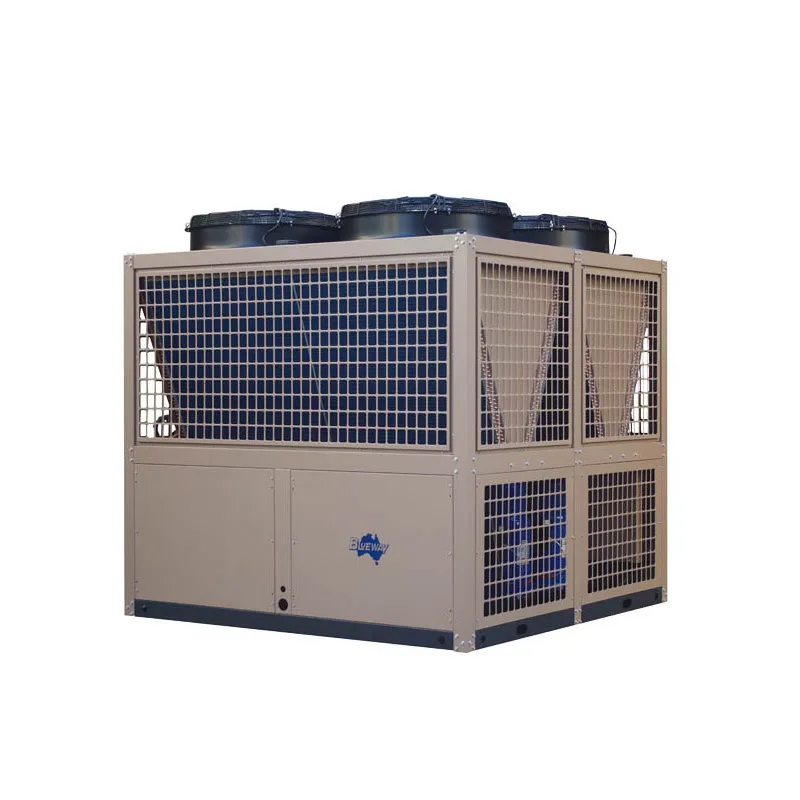
For large‑scale hot‑spring resorts with water volume exceeding 200 cubic meters, centralized hot‑spring heat‑pump systems are mandatory, paired with professional water circulation treatment equipment to ensure uniform water temperature and avoid local temperature deviation. Blueway provides customized system solutions for such large‑scale venues to satisfy complex working‑condition requirements.
In water‑scarce arid areas, conventional hot‑spring heating equipment usually relies on cooling towers for heat dissipation. Cooling towers consume massive water resources, conflict with local water‑saving policies and may even fail environmental‑protection approval. Hot spring heat pumps operate without cooling towers and dissipate heat through air, realizing effective water conservation.
Beyond water‑saving benefits, hot spring heat pumps deliver higher operational stability in arid zones. Traditional cooling towers are prone to poor heat dissipation and subsequent equipment faults caused by water shortage. Hot spring heat pumps draw heat from air and are free from water‑resource constraints, sustaining stable operation under extremely arid conditions.
Blueway hot spring heat pumps are specially optimized for working conditions in water‑scarce arid regions. Heat‑exchange efficiency under high‑temperature dry environments is enhanced to maintain stable hot‑spring water temperature even in hot summer periods without degradation of heating capacity.
Standardized maintenance is essential for long‑term stable operation of hot spring heat pumps. First, regularly clean scale and mineral deposits accumulated on heat‑exchanger surfaces. Minerals contained in hot‑spring water adhere to heat exchangers and degrade heat‑exchange efficiency. Cleaning shall be performed every 3‑6 months. Exact intervals shall be adjusted according to mineral concentration of source water.
Second, inspect compressor operating status regularly, including running noise and exhaust temperature. Abnormal noise or excessive temperature shall be checked by professional maintenance personnel promptly to prevent fault escalation and heavy losses.
In addition, examine the electrical system periodically to guarantee firm wiring and sound insulation performance and eliminate electric‑leakage safety hazards. Maintenance for electrical components is particularly critical in humid hot‑spring environments and shall only be completed by qualified professionals.
Special attention shall be paid: only original factory‑supplied spare parts and consumables shall be used for maintenance. Non‑standard accessories may cause performance degradation or equipment breakdown. Blueway operates service centers in numerous large‑ and medium‑sized domestic cities to deliver timely maintenance services and genuine spare‑part supply.
In terms of procurement cost, hot spring heat pumps generally cost 20%‑30% more than traditional fuel‑fired boilers. Nevertheless, they show prominent advantages in long‑term operating expenses. Taking a 100‑cubic‑meter hot‑spring venue as an example, annual energy consumption costs for traditional fuel‑fired boilers reach approximately RMB 150,000‑200,000, while hot spring heat pumps only require RMB 50,000‑80,000 per year.
Besides energy expenses, traditional fuel‑fired boilers incur extra costs for fuel transportation, storage and periodic environmental‑protection inspections. Hot spring heat pumps avoid such expenditures and only require routine maintenance fees equivalent to 2%‑3% of equipment procurement cost per year, far lower than maintenance costs of conventional heating equipment.
Service life of professional‑brand hot spring heat pumps can reach 15‑20 years, compared with merely 8‑10 years for fuel‑fired boilers. Calculated over the full life cycle, total costs of hot spring heat pumps account for only 40%‑50% of traditional equipment, delivering outstanding cost‑performance.
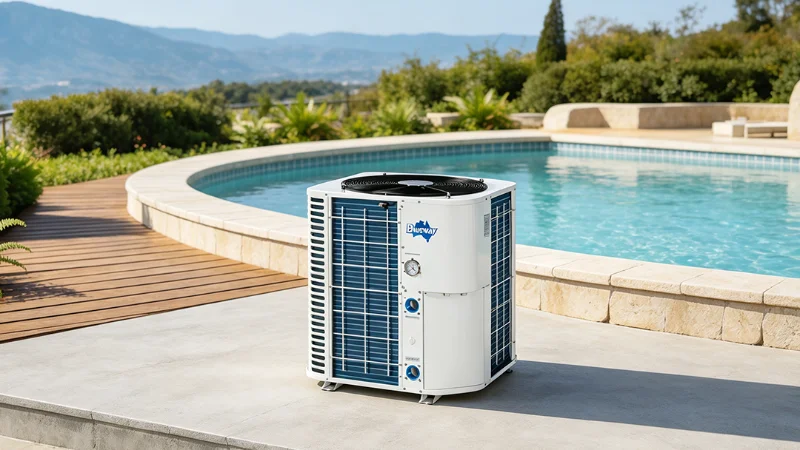
Blueway hot spring heat pumps have been deployed in multiple hot‑spring venues nationwide. For instance, a hot‑spring resort in South China adopted Blueway centralized hot‑spring heat‑pump system for constant‑temperature control of 200‑cubic‑meter hot‑spring water. After three years of operation, water‑temperature fluctuation remains within ±0.3℃, winning recognition from venue operators.
At a hot‑spring club in water‑scarce arid Northwest China, Blueway hot spring heat pumps work without cooling towers and rely solely on air heat dissipation. The system satisfies local water‑saving requirements and cuts annual energy‑consumption costs by 60%, generating substantial savings for operators.
Blueway also has multiple overseas hot‑spring heat‑pump project references. Products are exported to more than 30 countries and widely adopted by hot‑spring venues across Europe and America. Stable performance and energy‑saving effects have earned long‑term recognition from international clients.
Teams