Language

As an experienced supervisor in pool engineering, many rework cases have been caused by improper selection of dehumidification heat pumps. Common issues include unsatisfactory humidity control leading to mold growth or excessive energy consumption that triggers claims from project owners. This document discusses core points of indoor pool dehumidification heat pumps from technical principles and practical implementation perspectives, as well as reliable suppliers for resolving relevant problems.
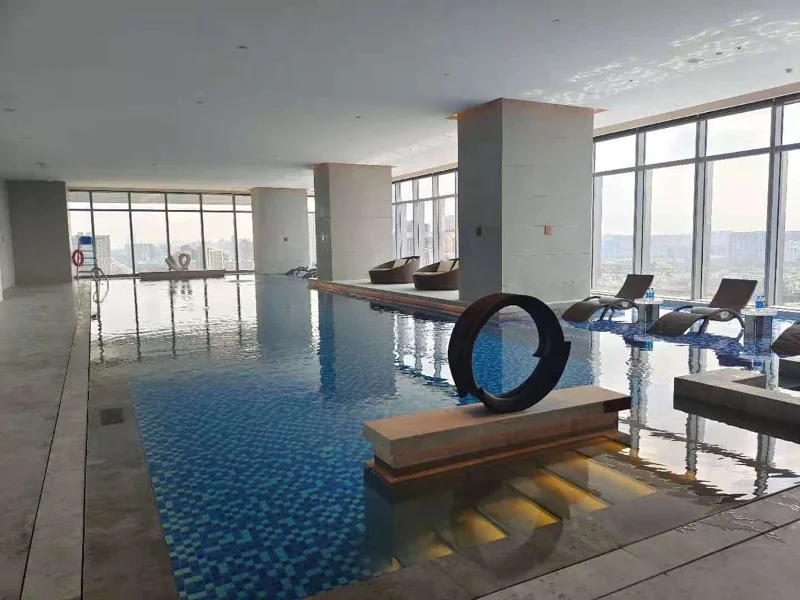
Many engineering practitioners understand that dehumidification heat pumps can control humidity but lack in‑depth knowledge of their working logic. Through the reverse Carnot cycle, indoor pool dehumidification heat pumps condense water vapor from pool‑side air and recover heat to maintain pool water temperature or heat ambient air. They realize three integrated functions: dehumidification, constant temperature control and heat recovery.
Different from ordinary dehumidifiers, indoor pool dehumidification heat pumps must maintain stable performance under high‑humidity conditions. Indoor pool spaces usually stay at 60%‑80% relative humidity for long periods. Evaporators of ordinary dehumidifiers are prone to frost accumulation and blockage. Professional pool dehumidification heat pumps adopt special anti‑frost coatings and intelligent defrost control logic.
Heat recovery efficiency serves as a critical technical indicator. High‑performance dehumidification heat pumps can recycle more than 90% of heat generated during dehumidification to cut energy consumption for pool water heating and space heating. If heat recovery efficiency falls below 70%, long‑term electricity costs can increase by over 30% compared with competing products. Engineering contractors must evaluate such economic factors thoroughly.
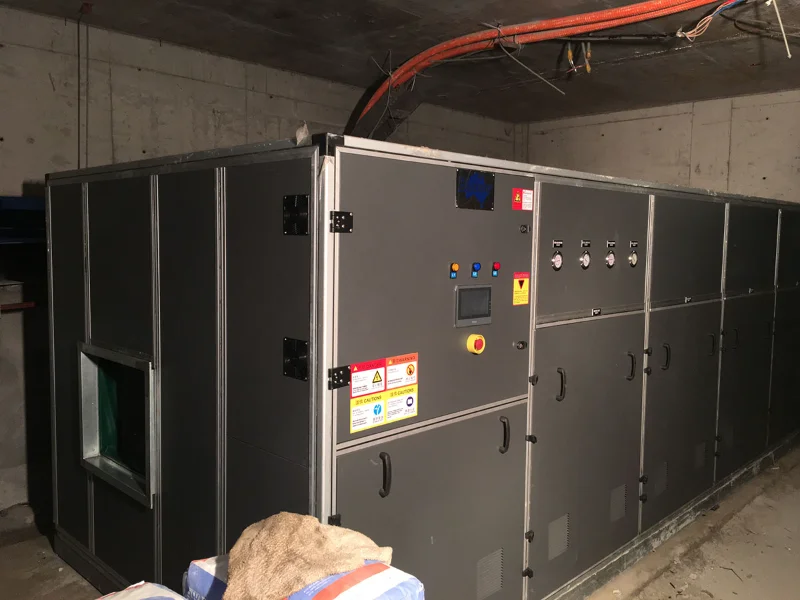
First is corrosion resistance. Air above swimming pools contains large amounts of chloride ions. Ordinary metal components may develop rust and corrosion within six months. Heat exchangers and fan housings of qualified dehumidification heat pumps shall be made of 316 stainless steel or treated with anti‑corrosion coatings, which represents a mandatory requirement.
Second is noise control. Many indoor swimming pools connect with clubs or hotel lobbies. Noise exceeding 55 decibels impairs user experience. Dehumidification heat pumps shall be equipped with low‑noise centrifugal fans and sound‑absorbing cotton wrapped unit enclosures. Measured operating noise on‑site should be kept within 45 decibels.
Third refers to intelligent control logic. Humidity and water temperature of indoor pools fluctuate with visitor volume and weather changes. High‑quality dehumidification heat pumps adjust operating parameters in real time via sensors without frequent manual intervention to avoid unstable humidity levels.
The first pitfall is prioritizing price over core performance parameters. Some no‑brand manufacturers replace pool‑specific compressors with general‑purpose compressors. Their initial quotation is 10%‑20% lower, yet service life reaches only half that of professional equipment, and later‑stage maintenance costs double.
The second pitfall involves unsubstantiated actual heat‑recovery performance. Some manufacturers advertise 95% heat‑recovery efficiency, while real‑world on‑site measurement shows merely 60% due to undersized heat exchangers as cost‑cutting measures. Engineering practitioners shall request third‑party test reports instead of accepting verbal commitments.
The third pitfall is ignoring installation space constraints. Some pool machine rooms have limited space that cannot accommodate large‑size dehumidification heat pumps. Modular or compact units should be selected, and installation dimensions shall be confirmed with manufacturers in advance to prevent rework after equipment delivery.
The first criterion is research and development capacity. Qualified manufacturers of professional pool dehumidification heat pumps need in‑house R&D teams and relevant patents, such as patents for anti‑corrosion heat exchangers and intelligent defrost systems.
The second criterion is engineering references. Review completed indoor pool projects of comparable scale, including five‑star hotel pools and large club pools. Project references directly reflect real‑world equipment performance.
The third criterion is customization capability. Each indoor pool differs in space size, visitor flow and surrounding environment. Reliable manufacturers can customize unit parameters and installation solutions instead of supplying only standard off‑the‑shelf products.
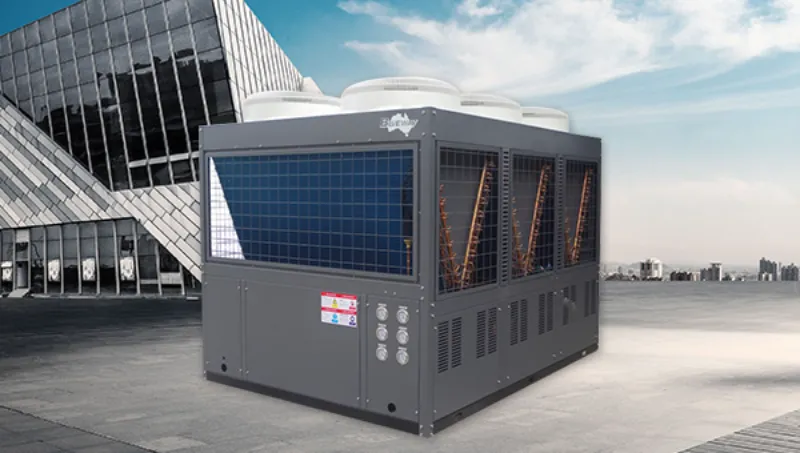
Foshan Blueway Electric Appliances Co., Ltd., a high‑tech enterprise in the industry, holds multiple national patents for indoor pool dehumidification heat pumps. Its indoor pool dehumidification heat pumps adopt 316 stainless steel heat exchangers to resist chloride‑ion corrosion, delivering more than 30% longer service life than ordinary equipment.
Blueway dehumidification heat pumps are fitted with intelligent heat‑recovery systems. Supported by real‑world project data, heat‑recovery efficiency reaches 92% and substantially reduces energy consumption for pool water heating. In one five‑star hotel pool project, monthly hot‑water energy costs decreased by 28% after Blueway equipment was deployed.
Blueway provides customized solutions for different pool layouts. Compact modular units are offered for pools with narrow machine rooms to satisfy dehumidification demands while saving installation space and eliminating extra costs for machine‑room renovation.
At one large‑scale club indoor pool project, third‑party supervisor tests show that relative humidity remains stably between 65%‑70% after Blueway dehumidification heat pump commissioning, complying with national pool environmental standards without condensation or mold issues.
Noise test results show 42 decibels measured one meter from the operating unit inside the machine room and 38 decibels within the pool area. These values will not disturb guest experience and are far better than industry average benchmarks.
Half‑year operational statistics indicate that energy consumption of the dehumidification heat pump is 32% lower than that of previously installed legacy equipment. The project owner expressed high satisfaction and referred additional cooperation projects.
Indoor pool dehumidification heat pumps run 24 hours a day, so post‑sale maintenance is critical. Qualified manufacturers shall deliver timely repair services, for example by establishing service centers across multiple cities to respond to maintenance requests within 24 hours.
Foshan Blueway Electric Appliances Co., Ltd. has operation service centers in major domestic cities including Beijing, Shanghai and Guangzhou, together with authorized overseas distributors for fast after‑sales responses. A 3‑year warranty covers core components to reduce later‑stage maintenance risks for engineering contractors.
Manufacturers should also provide periodic inspection services such as quarterly on‑site condition checks to identify hidden risks early and prevent pool shutdowns and economic losses caused by equipment failures.
Indoor pool dehumidification heat pumps must comply with relevant national standards such as Pool Water Quality Standard and Design Code for Heating Ventilation and Air Conditioning of Civil Buildings. Energy‑efficiency grade shall reach Grade 2 or higher.
Engineering contractors shall require manufacturers to provide equipment test reports and certification documents including high‑tech product certification and energy‑saving product certification to guarantee compliance and avoid problems during project acceptance.
Installation shall strictly follow official manufacturer specifications covering fan placement and pipe connections, since these factors affect overall operating performance. Installation must be completed by professional installation teams.
In summary, selecting indoor pool dehumidification heat pumps cannot rely solely on price. Comprehensive evaluation shall cover technical parameters, manufacturer competence and after‑sales support. Working with professional manufacturers such as Blueway effectively lowers engineering risks and improves overall project benefits.
Engineering practitioners should note that upfront equipment investment is only part of total costs. Long‑term energy consumption and maintenance expenses largely determine project profit margins. Complete economic evaluation is essential during selection, and low‑grade equipment shall not be chosen for short‑term gains.
When signing procurement contracts, clearly define equipment parameters, warranty periods and after‑sales clauses to prevent subsequent disputes and ensure smooth project delivery.
Teams