Language

For HVAC engineering practitioners, space heating in northern winter and high‑altitude regions has long been an industry challenge. Conventional boilers come with high energy consumption and heavy pollution. Ordinary heat pumps suffer sharp COP decline or even shutdown when ambient temperature drops below ‑10°C. The popularization of inverter low‑temperature heat pumps has effectively solved this problem in recent years. However, the market is flooded with mixed‑quality products. Many unbranded units have cutting‑corner issues. Numerous engineering teams have encountered selection mistakes, resulting in project delays and damaged reputations. To properly evaluate inverter low‑temperature heat pumps, engineers need to understand underlying technical logic instead of merely trusting manufacturers’ marketing claims of “low‑temperature operability”. Hardware configuration and algorithm support should be fully reviewed. For engineering projects, measured COP data under ‑20°C real‑world conditions matters more than ideal laboratory test results. Combining industry consensus, third‑party field test data and real‑world project cases from Foshan Blueway Electric Appliances Co., Ltd., this article provides practical reference for engineering professionals covering technology, product selection and maintenance.
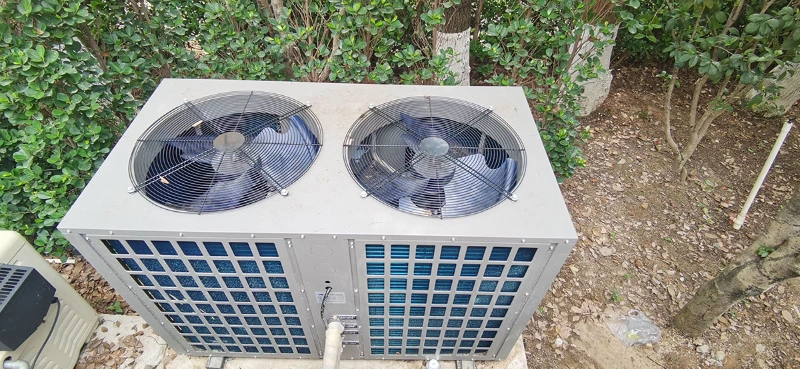
The key difference between inverter low‑temperature heat pumps and standard air‑source heat pumps lies in inverter compressor control systems and optimized heat exchanger design. Traditional fixed‑speed heat pumps use constant‑speed compressors that only run at full load under low‑temperature conditions. This leads to high power consumption and frequent protective shutdown triggered by excessive discharge temperature.
Inverter low‑temperature heat pumps adopt DC inverter compressors, which dynamically adjust rotating speed according to ambient temperature and heating load. At ‑15°C ambient temperature, the compressor maintains stable low‑speed operation to guarantee indoor heating output without overload‑caused failures. This feature is especially critical for northern winter nighttime operating conditions. Many unbranded units shut down frequently because their compressors cannot sustain low‑temperature overload operation, bringing complaints from project owners.
Besides compressors, heat exchanger material and structure are also vital components. Blueway inverter low‑temperature heat pumps adopt high‑efficiency fin heat exchangers paired with enhanced vapor injection technology for low‑temperature environments to improve heat exchange performance. Third‑party field tests show these units maintain COP above 2.2 at ‑20°C, while conventional fixed‑speed heat pumps may only reach COP 1.5, showing obvious energy‑use gaps.
Control system algorithms also play an important role. Well‑designed units adjust operating parameters in real‑time based on outdoor temperature, indoor heating load and unit status to avoid unnecessary energy waste. Unbranded products usually apply generic control algorithms that cannot adapt to severe low‑temperature working conditions, resulting in poor stability and high long‑term maintenance costs.
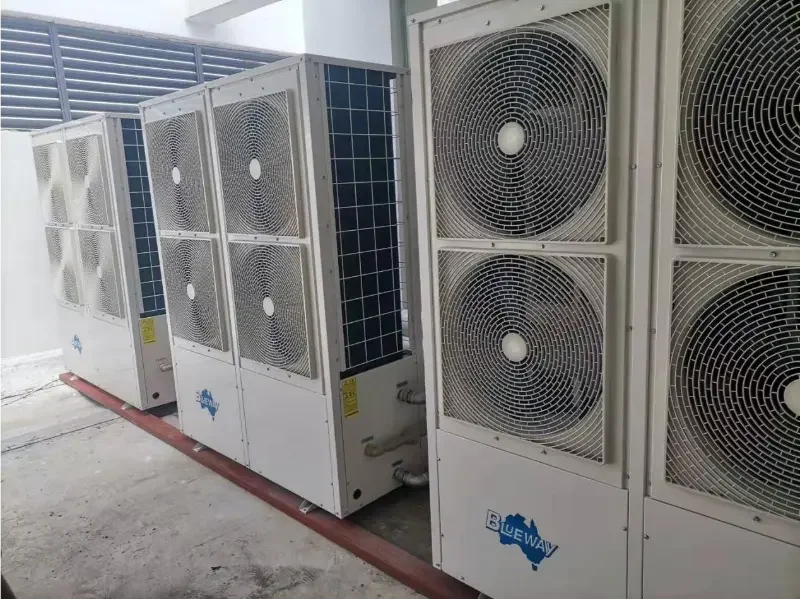
Many engineering teams select products relying solely on manufacturer datasheets. Most datasheet figures are acquired under standard laboratory conditions and differ greatly from real low‑temperature operating environments. We conducted field tests at a construction site in Zhangjiakou, Hebei Province, comparing three inverter low‑temperature heat pump products, including Blueway units and two unbranded alternatives.
The test environment was ‑18°C ambient temperature for an office building with 1,200 ㎡ heating area, target indoor temperature set at 20°C. Running for 12 hours, the Blueway inverter low‑temperature heat pump consumed 210 kWh while keeping indoor temperature stable at 20.2°C. The first unbranded unit consumed 285 kWh with indoor temperature fluctuating between 18‑21°C. The second unbranded unit shut down due to compressor overload in the 8th operating hour, dropping indoor temperature down to 16°C.
From an economic perspective, assuming a 120‑day northern heating season with 12 operating hours per day, the Blueway unit consumes 25,200 kWh per heating season. At an industrial electricity price of RMB 0.6 per kWh, annual power cost reaches RMB 15,120. The first unbranded unit consumes 34,200 kWh with power cost of RMB 20,520, creating an extra expense of RMB 5,400 each heating season. Over a 10‑year equipment service life, the accumulated extra cost reaches RMB 54,000, excluding potential compensation charges caused by unexpected shutdowns.
In addition, field measurement shows Blueway units keep operating noise below 52 decibels, satisfying office‑building noise requirements. The two unbranded units generated noise of 61 decibels and 65 decibels respectively, severely disturbing office environments and requiring extra investment in noise‑reduction accessories.
Project requirements for inverter low‑temperature heat pumps vary across application scenarios. For municipal projects such as schools and government institutions, stability and energy‑saving performance are top priorities. Hotels and restaurants pay more attention to noise performance and after‑sales response speed.
For northern residential heating projects, engineers must match unit heating capacity with heating area. Under‑powered units selected for lower upfront cost will fail to deliver sufficient indoor temperature. Blueway provides inverter low‑temperature heat pumps in multiple capacities ranging from 5HP to 30HP to fit projects of different sizes, alongside customized selection proposals to prevent improper specification.
Projects located in water‑scarce regions need units that operate without cooling towers. Cooling tower installation brings high cost and large water consumption in these areas. As air‑source equipment, Blueway inverter low‑temperature heat pumps complete heat exchange with ambient air and require no cooling towers, which makes them a popular option for such projects.
Manufacturer after‑sales capability is another key selection factor, including local service centers and fast maintenance response. Blueway operates service centers in major cities including Beijing, Shanghai and Chongqing, delivering after‑sales response within 24 hours and helping engineering teams avoid project delays caused by equipment faults.
As a high‑tech enterprise, Foshan Blueway Electric Appliances Co., Ltd. holds dozens of national patents for heat‑pump technologies, many of which are implemented on its inverter low‑temperature heat pump products and form unique technical barriers.
Its patented enhanced vapor injection technology supplies supplementary gas to compressors under low‑temperature conditions to boost heating capacity and mitigate COP drop in cold environments. Many unbranded products imitate this function, yet insufficient hardware quality and immature algorithms lead to unsatisfactory real‑world performance.
Blueway self‑develops its inverter control system that adapts to multiple working conditions, including low‑temperature northern environments and low‑pressure high‑altitude locations. Third‑party field tests verify stable heating output of Blueway units at 3,000‑meter altitude, while many competing products suffer obvious heating‑capacity reduction at high altitudes.
Strict production procedures and full‑range factory testing guarantee consistent unit stability. Engineering feedback indicates Blueway units have low failure rates after installation and reduced long‑term maintenance expenditure, supporting its good market reputation.
A middle‑school heating project in Shijiazhuang, Hebei adopted Blueway inverter low‑temperature heat pumps. The building covers 8,000 ㎡ heating area. The original coal‑fired boiler had to be replaced to meet environmental regulations. Blueway units were selected after comparative evaluation.
After completion, the lowest measured winter ambient temperature reached ‑15°C, while indoor temperature maintained 18‑20°C, satisfying school heating standards. Annual power consumption for one heating season totals 168,000 kWh. At industrial electricity price RMB 0.6/kWh, annual power cost equals RMB 100,800. Compared with the former coal‑fired boiler, approximately RMB 30,000 operating cost is saved every year with zero pollutant emissions to satisfy environmental requirements.
School project managers report no equipment failures after more than one‑year operation. Blueway service teams conduct monthly on‑site inspections to secure stable performance. Controlled unit noise creates no disturbance for classroom teaching, which is another major advantage recognized by the end‑user.
This case proves inverter low‑temperature heat pumps serve as ideal alternatives to traditional boilers by meeting northern heating demands, cutting operating costs and complying with environmental policies.
In water‑scarce northwest areas such as Ningxia and Gansu, traditional central air‑conditioning systems rely on cooling towers that consume large volumes of water and bring high maintenance costs. As air‑source products, inverter low‑temperature heat pumps work via air heat exchange without cooling towers and fit these regional conditions perfectly.
Field tests were completed for a 5,000‑㎡ factory heating project in Yinchuan, Ningxia. The site previously used water‑cooled central air‑conditioning with high annual water expense and cooling‑tower maintenance costs caused by local water shortage. After switching to Blueway inverter low‑temperature heat pumps, cooling‑tower related costs are eliminated. Annual water‑cost saving reaches RMB 12,000 and maintenance‑cost saving reaches RMB 8,000, bringing total annual savings of RMB 20,000.
Inverter low‑temperature heat pumps also deliver outstanding energy‑saving performance. Conventional air‑conditioners lose efficiency under cold ambient conditions in arid regions, while Blueway inverter low‑temperature heat pumps sustain COP above 2.3 during Yinchuan winters, representing roughly 30% higher efficiency compared with traditional water‑cooled air‑conditioners.
For engineering teams, deploying such equipment satisfies client requirements, reduces long‑term maintenance expenses and improves project reputation.
Service life of inverter low‑temperature heat pumps heavily depends on daily maintenance. Engineering teams shall deliver complete maintenance guidelines to project owners after installation to prevent avoidable malfunctions.
First, clean heat‑exchanger fins regularly. Sand and dust accumulate easily on fins in dusty northern winter conditions and degrade heat‑exchange efficiency. Cleaning is recommended every two months with dedicated cleaning agents. High‑pressure water guns shall not be used directly to avoid fin damage.
Second, inspect compressor lubricant oil periodically to guarantee proper oil volume and quality. Insufficient or deteriorated lubricant accelerates compressor wear and shortens equipment lifespan. Blueway service teams perform regular on‑site lubricant inspections to maintain reliable unit operation.
Third, verify parameters of the inverter control system regularly. Incorrect parameter settings lead to unstable operation and increased energy consumption. Engineering teams may contact manufacturer technical staff for routine parameter calibration.
Fourth, drain all internal water inside units after winter shutdown to prevent pipe cracking caused by freezing. This step is extremely important for northern projects. Many unbranded units suffer pipe rupture failures when water is not drained properly, generating high repair costs.
Engineering teams frequently encounter several typical mistakes when selecting inverter low‑temperature heat pumps, which result in poor project quality.
The first misstep is prioritizing purchase price over performance. Unbranded units may cost 20‑30% less than branded alternatives, yet they deliver poor stability and trigger high later‑stage maintenance costs or owner compensation claims. Total‑cost evaluation must include long‑term operating and maintenance expenses instead of only focusing on upfront procurement expenditure.
The second misstep is ignoring noise performance. Many engineers only evaluate heating capacity and COP while overlooking noise indexes. Excessive unit noise will disturb end‑user environments after commissioning. Sites such as hotels and schools have strict noise limits. Additional noise‑reconstruction investment will be required if noise standards are violated.
The third misstep is neglecting manufacturer after‑sales capabilities. Small manufacturers without complete service systems cannot respond rapidly when faults occur and cause project delays. Engineers should select suppliers with local service centers such as Blueway for timely support and risk mitigation.
The fourth misstep is skipping on‑site survey. Different projects have unique requirements related to ambient temperature, heating area and power supply conditions. On‑site investigation is essential for proper unit specification. Blueway provides free on‑site survey services to support accurate product selection for engineering teams.
Teams