Language

In tropical regions, the combination of high ambient temperatures and extreme humidity creates a unique challenge for cooling systems. A chiller that performs flawlessly in a temperate climate may struggle or fail entirely when the mercury climbs above 40°C and the relative humidity exceeds 90%. The compressor overheats, the condenser cannot reject heat efficiently, and corrosion attacks every metal surface. For industries that rely on process cooling—from food and beverage production to plastics manufacturing and HVAC comfort cooling—this is not a minor inconvenience; it is a threat to production continuity. The air source water chiller, when specifically engineered for tropical conditions, offers a reliable solution to these challenges.
So what makes an air source water chiller ideal for tropical regions? The answer lies in a combination of design features: a high-ambient compressor that can operate at condensing temperatures up to 65°C, a generously sized condenser with anti-corrosion coating to resist salt-laden air, intelligent controls that adapt to fluctuating loads, and robust electrical components that can withstand voltage variations common in tropical power grids. At Foshan Blueway Electric Appliances Co., Ltd., our factory has been designing and manufacturing air source water chillers specifically for tropical markets for over 15 years. We understand that the difference between a standard chiller and a tropical-rated chiller is not a single feature; it is a holistic engineering approach that addresses every vulnerability. This article will examine the technical and engineering factors that make air source water chillers the ideal choice for tropical climates.
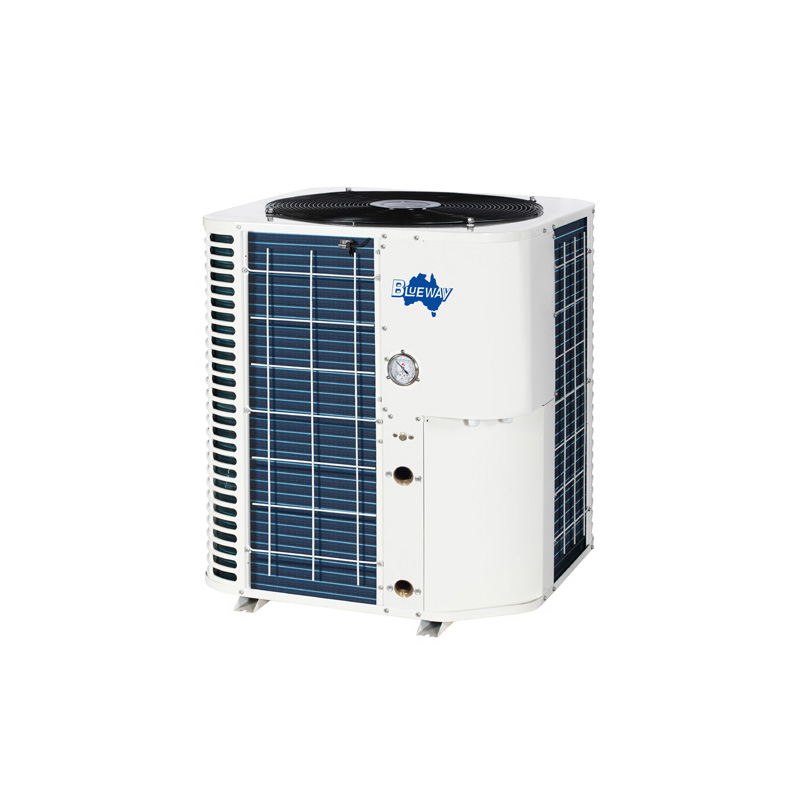
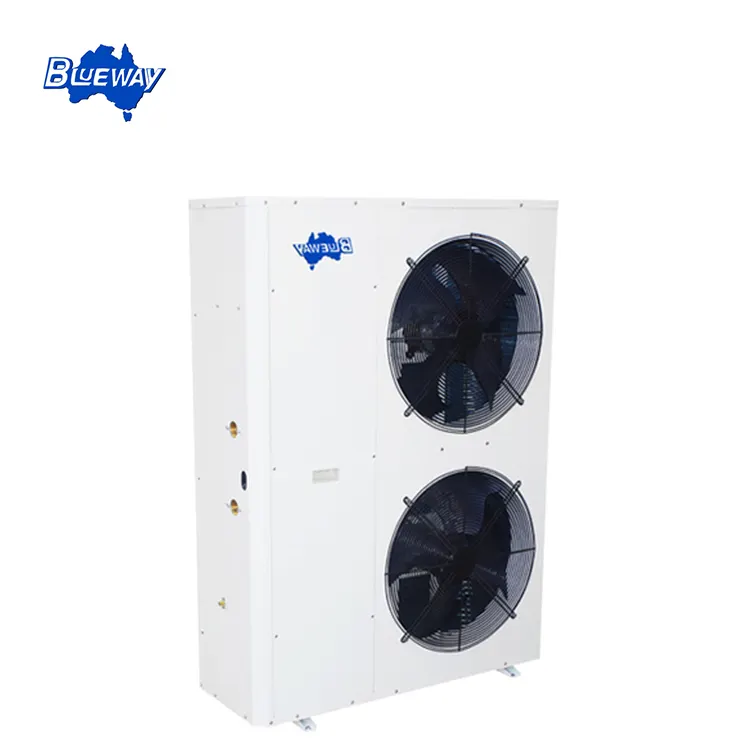
An air source water chiller is a refrigeration system that removes heat from water and rejects that heat into the surrounding air. It is called "air source" because the ambient air is used as the cooling medium for the condenser. The chiller consists of four primary components: a compressor, a condenser, an expansion device, and an evaporator. The refrigerant circulates through these components in a closed loop. In the evaporator, the refrigerant absorbs heat from the process water, causing the water temperature to drop. The refrigerant then travels to the compressor, where its pressure and temperature are raised. In the condenser, the refrigerant releases the absorbed heat to the ambient air, condensing back into a liquid. Finally, the refrigerant passes through the expansion device, where its pressure and temperature drop, and it returns to the evaporator to repeat the cycle.
The performance of an air source water chiller is heavily dependent on the ambient air temperature. The condenser must reject heat to the air, and the rate at which it can do so is determined by the temperature difference between the refrigerant and the air. In a tropical climate, where the ambient temperature may be 40°C or higher, this temperature difference is small, making heat rejection more difficult. The compressor must work harder, consuming more energy and generating more heat. This is why a standard chiller that is rated for a maximum ambient temperature of 35°C will struggle in a tropical environment. At Foshan Blueway Electric Appliances Co., Ltd., our factory designs air source water chillers specifically for tropical conditions, with oversized condensers, high-ambient compressors, and intelligent controls that optimize performance even in the most extreme heat.
The fundamental challenge of operating a chiller in a tropical climate is the high ambient temperature. As the ambient temperature rises, the condensing temperature of the refrigerant must also rise to maintain the necessary temperature difference for heat rejection. This has several consequences. First, the compressor must work harder to raise the refrigerant pressure, consuming more energy. Second, the compressor's internal components are subjected to higher temperatures, which can lead to premature wear and failure. Third, the cooling capacity of the chiller decreases, because the refrigerant is less able to absorb heat in the evaporator. The table below illustrates how the performance of a standard chiller degrades as the ambient temperature increases.
| Ambient Temperature (°C) | Cooling Capacity (%) | Power Consumption (%) | Compressor Discharge Temperature (°C) |
| 25 | 100 | 100 | 75 |
| 30 | 95 | 108 | 82 |
| 35 | 88 | 120 | 90 |
| 40 | 78 | 135 | 100 |
| 45 | 65 | 155 | 112 |
| 50 | 50 | 180 | 125 |
As the table shows, at 40°C ambient, the cooling capacity of a standard chiller drops to 78% of its rated capacity, while power consumption increases by 35%. At 45°C, the capacity drops to 65%, and power consumption increases by 55%. This means that a standard chiller that is rated at 100 kW will only deliver 65 kW of cooling at 45°C, while consuming significantly more energy. This is not acceptable for most industrial processes, which require consistent cooling capacity regardless of the ambient temperature.
The high compressor discharge temperature is another critical issue. At 45°C ambient, the discharge temperature can reach 112°C or higher. This can cause the compressor oil to degrade, leading to inadequate lubrication and eventual compressor failure. Standard compressors are not designed to operate at these temperatures for extended periods. This is why tropical-rated air source water chillers use high-ambient compressors that are specifically designed to operate at higher discharge temperatures, with special oil and internal components that can withstand the heat. At our factory, we use only compressors that are rated for a minimum condensing temperature of 65°C, ensuring reliable operation even in the most extreme tropical conditions.
High humidity is the second major challenge of tropical climates. Humidity affects a chiller in two primary ways: it increases the latent heat load and it accelerates corrosion. When the air is humid, the condenser must not only reject the heat from the refrigerant but also the latent heat from the condensation of water vapor on the condenser coils. This additional load can be significant, reducing the effective cooling capacity of the chiller. The condensation also creates a wet environment on the coil surface, which can lead to the growth of algae and mold, further reducing heat transfer efficiency. Our factory addresses this by using specially coated condenser coils that resist biological growth and by designing the coil geometry to promote drainage and prevent water from pooling.
Corrosion is perhaps the most insidious effect of humidity. In tropical coastal regions, the air contains salt particles that, when combined with moisture, form a highly corrosive electrolyte. This electrolyte attacks the aluminum fins of the condenser coil, the steel housing of the chiller, and the electrical components. Over time, the fins can corrode away, reducing the heat transfer area and causing the chiller to lose capacity. The housing can rust through, allowing water to enter and damage the internal components. This is why tropical-rated air source water chillers must be built with corrosion-resistant materials. The table below summarizes the corrosion protection measures used in our tropical chillers.
| Component | Standard Chiller | Tropical-Rated Chiller |
| Condenser Coil Fins | Standard aluminum | Gold epoxy coating or copper fins |
| Coil Frame | Galvanized steel | Stainless steel or epoxy-coated steel |
| Housing | Painted steel | Powder-coated steel or stainless steel |
| Electrical Enclosure | IP54 | IP65 or higher |
| Fasteners | Zinc-plated | Stainless steel |
At Foshan Blueway Electric Appliances Co., Ltd., our factory subjects every tropical-rated chiller to a rigorous salt spray test to verify the effectiveness of the corrosion protection. We also offer an optional anti-corrosion package that includes additional coatings and stainless steel components for installations in the most aggressive coastal environments. Our experience in tropical markets has taught us that corrosion protection is not an optional extra; it is a fundamental requirement for reliability and longevity.
Designing an air source water chiller for tropical climates requires a holistic approach that addresses the challenges of high ambient temperature, high humidity, and corrosion. The following are the key design features that make our chillers suitable for tropical regions.
High-Ambient Compressor: The compressor is the heart of the chiller, and it must be selected for high-ambient operation. Our tropical chillers use scroll or screw compressors that are rated for a maximum condensing temperature of 65°C or higher. These compressors feature high-temperature motor insulation, enhanced cooling, and special lubricants that maintain their properties at elevated temperatures.
Oversized Condenser: The condenser must be sized to reject the heat load at the highest expected ambient temperature. Our tropical chillers use condensers that are 20-30% larger than those used in standard chillers, providing additional surface area for heat rejection. The condenser coils are arranged in a configuration that maximizes airflow and minimizes the risk of air recirculation.
Intelligent Control System: The control system must be able to adapt to the fluctuating conditions of a tropical climate. Our chillers are equipped with PLC-based controls that monitor the ambient temperature, the refrigerant pressures, and the water temperature. The controller adjusts the compressor speed, the fan speed, and the expansion valve position to optimize performance and energy efficiency. The controller also has a built-in high-ambient protection logic that prevents the compressor from operating outside its safe envelope.
Corrosion-Resistant Construction: As discussed in the previous section, all components of the chiller must be protected against corrosion. This includes the condenser coil, the housing, the frame, and the electrical enclosure.
Robust Electrical System: Tropical power grids can be subject to voltage fluctuations and surges. Our chillers are equipped with electrical components that can tolerate a wide voltage range (e.g., +/- 15%) and are protected against phase loss, phase reversal, and overvoltage. The table below summarizes the key design features and their benefits.
| Design Feature | Benefit |
| High-Ambient Compressor | Reliable operation at condensing temperatures up to 65°C |
| Oversized Condenser | Maintains cooling capacity at high ambient temperatures |
| Intelligent Control System | Optimizes performance and energy efficiency |
| Corrosion-Resistant Construction | Extends service life in humid, salt-laden environments |
| Robust Electrical System | Withstands voltage fluctuations common in tropical grids |
When selecting an air source water chiller for a tropical application, it is important to review the technical specifications carefully. The specifications should confirm that the chiller is designed for the high ambient temperatures and humidity of the region. The following table provides the key technical specifications for our tropical-rated air source water chillers. These specifications are based on our standard models, but we can customize the design to meet specific project requirements.
| Specification | Value | Notes |
| Cooling Capacity Range | 10 kW - 500 kW | Custom capacities available |
| Max Ambient Temperature | 50°C | Higher ratings available for extreme conditions |
| Compressor Type | Scroll or Screw | High-ambient rated, max condensing temp 65°C |
| Refrigerant | R410A, R134a, R407C | Environmentally friendly options available |
| Condenser Coil | Copper tubes with aluminum fins | Gold epoxy coating or copper fins for corrosion resistance |
| Evaporator Type | Shell and tube or plate | Stainless steel or copper construction |
| Water Temperature Range | 5°C - 30°C | Lower temperatures available with glycol |
| Control System | PLC with touchscreen HMI | Remote monitoring and BMS integration available |
| Electrical Supply | 380V/3Ph/50Hz or 60Hz | Other voltages available on request |
| Protection Rating | IP54 (standard) / IP65 (optional) | For outdoor installation |
Our factory at Foshan Blueway Electric Appliances Co., Ltd. provides detailed technical data sheets for each of our air source water chiller models. These data sheets include performance curves, electrical schematics, and dimensional drawings. We also offer a selection software that allows engineers to input their specific requirements and receive a recommended chiller model. Our technical team is available to assist with the selection process and to answer any questions.
Maintenance is critical for any chiller, but it is especially important in tropical environments. The high ambient temperature, high humidity, and corrosive atmosphere accelerate wear and tear on the chiller components. A maintenance program that is adequate for a temperate climate may be insufficient for a tropical climate. The following are the key maintenance tasks that should be performed more frequently in tropical environments.
Condenser Coil Cleaning: The condenser coil should be cleaned more frequently in tropical environments because the high humidity and dust can cause a build-up of dirt and biological growth on the coil fins. A dirty coil reduces heat transfer efficiency and increases energy consumption. We recommend cleaning the coil at least monthly, or more frequently in dusty or coastal locations. Our factory provides coil cleaning kits and instructions for our chillers.
Corrosion Inspection: The chiller should be inspected regularly for signs of corrosion. Any rust spots should be treated immediately to prevent the corrosion from spreading. The electrical enclosure should be checked for water ingress and the seals should be inspected. We recommend a thorough corrosion inspection every three months.
Compressor Maintenance: The compressor should be checked for unusual noise, vibration, and temperature. The oil level and quality should be checked regularly. In high-ambient conditions, the compressor oil may degrade more quickly, so we recommend an oil analysis every six months and an oil change every 12 months or as recommended by the compressor manufacturer.
Electrical System Check: The electrical connections should be checked for tightness and signs of overheating. The contactors and relays should be inspected for pitting. The control system should be tested to ensure that all sensors and alarms are functioning correctly. We recommend an electrical system check every six months.
The table below summarizes the recommended maintenance schedule for our tropical-rated air source water chillers.
| Task | Frequency | Notes |
| Condenser Coil Cleaning | Monthly | More frequent in dusty or coastal areas |
| Corrosion Inspection | Quarterly | Treat rust spots immediately |
| Compressor Oil Check | Every 6 months | Oil analysis recommended |
| Compressor Oil Change | Annually | Or as recommended by compressor manufacturer |
| Electrical System Check | Every 6 months | Check connections, contactors, and controls |
| Refrigerant Charge Check | Annually | Check for leaks and top up if necessary |
At Foshan Blueway Electric Appliances Co., Ltd., we provide our customers with a comprehensive maintenance manual and offer maintenance training for their technicians. We also offer a preventive maintenance service contract that includes regular inspections and cleaning. Our goal is to ensure that our chillers continue to perform reliably in the tropical environment for many years.
Question 1: What is the maximum ambient temperature that a standard air source water chiller can handle?
Answer: A standard air source water chiller is typically designed for a maximum ambient temperature of 35°C to 40°C. Above this temperature, the chiller's cooling capacity decreases, and the compressor may overheat or fail. For tropical regions where ambient temperatures can exceed 45°C, a tropical-rated chiller is required. Our tropical-rated air source water chillers are designed to operate reliably at ambient temperatures up to 50°C.
Question 2: How does humidity affect the performance of an air source water chiller?
Answer: High humidity increases the latent heat load on the chiller, because the condenser must also reject the heat from the condensation of water vapor in the air. This reduces the effective cooling capacity of the chiller. High humidity also accelerates corrosion of the condenser coil and other metal components. Our tropical-rated chillers are designed with oversized condensers and corrosion-resistant materials to mitigate these effects.
Question 3: Can I use a standard chiller in a tropical climate if I add a water spray system to the condenser?
Answer: While a water spray system can temporarily improve the performance of a standard chiller in a hot climate, it is not a substitute for a tropical-rated chiller. Water spray systems consume water, create a mess, and can accelerate corrosion. They also do not address the fundamental limitations of the compressor and the condenser. For reliable, long-term operation in a tropical climate, a chiller that is specifically designed for high ambient temperatures and humidity is the correct solution.
Question 4: What is the typical lifespan of an air source water chiller in a tropical environment?
Answer: With proper maintenance, a tropical-rated air source water chiller can last 10-15 years or more. The lifespan depends on the quality of the chiller, the severity of the environment, and the effectiveness of the maintenance program. In coastal areas with high salt content in the air, corrosion can be more aggressive, and the lifespan may be shorter unless additional corrosion protection is used. Our chillers are built with corrosion-resistant materials and are designed to withstand the tropical environment.
Question 5: How does the energy efficiency of a tropical-rated chiller compare to a standard chiller in a tropical climate?
Answer: A tropical-rated chiller is more energy-efficient in a tropical climate than a standard chiller. Because it is designed to operate at high ambient temperatures, it can maintain its cooling capacity without overworking the compressor. A standard chiller, by contrast, would consume more energy to achieve the same cooling output, and its capacity would be reduced. The higher initial cost of a tropical-rated chiller is recovered through lower energy bills and reduced maintenance costs over its service life.
Air source water chillers are ideal for tropical regions when they are specifically designed for the challenges of high ambient temperature, high humidity, and corrosive atmospheres. The key design features—high-ambient compressors, oversized condensers, intelligent controls, and corrosion-resistant construction—ensure that these chillers deliver reliable, efficient cooling even in the most extreme conditions. At Foshan Blueway Electric Appliances Co., Ltd., our factory has been at the forefront of tropical chiller design for over 15 years. We understand the unique demands of tropical environments, and we have engineered our air source water chillers to meet those demands. Our products are trusted by industries across Southeast Asia, the Middle East, Africa, and Latin America.
Whether you are designing a new cooling system for a factory in Vietnam, a hotel in the Maldives, or a data center in Singapore, our tropical-rated air source water chillers are the reliable choice. We invite you to contact our technical team to discuss your specific requirements. We can help you select the right chiller model, provide detailed performance data, and offer customized solutions to meet your project needs.
Contact Foshan Blueway Electric Appliances Co., Ltd. today to learn more about our air source water chillers for tropical regions.
Teams