Abstract: As commercial buildings demand more reliable, energy-conscious, and climate-adaptable cooling solutions, the Commercial Air Cooled Water Chiller has become an increasingly practical choice. Blueway develops commercial air-cooled water chiller solutions for hotels, office towers, schools, hospitals, factories, and other demanding facilities, with designs suited to high-temperature environments. This guide explains how these chillers work, their major components, key advantages, applications, and the factors buyers should consider before selecting a system.
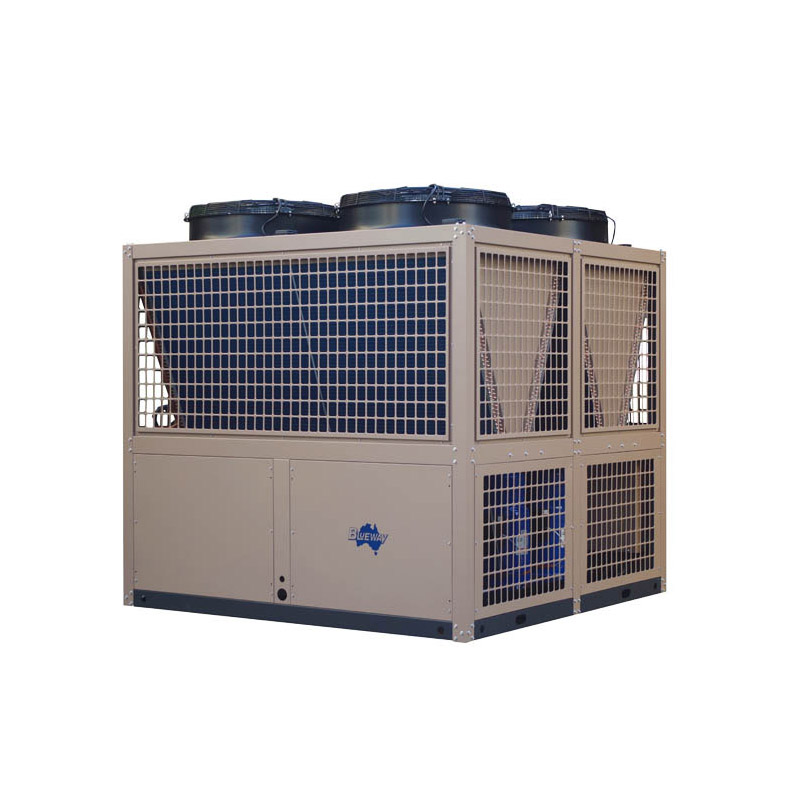
Table of Contents
- What Is a Commercial Air Cooled Water Chiller?
- How Does a Commercial Air Cooled Water Chiller Work?
- What Are the Key Components?
- What Are the Main Advantages?
- Where Can Commercial Air Cooled Water Chillers Be Used?
- How Should You Select the Right Chiller?
- Commercial Air Cooled Water Chiller Selection Factors
- How Can You Improve Chiller Reliability and Service Life?
- Frequently Asked Questions
- Conclusion
What Is a Commercial Air Cooled Water Chiller?
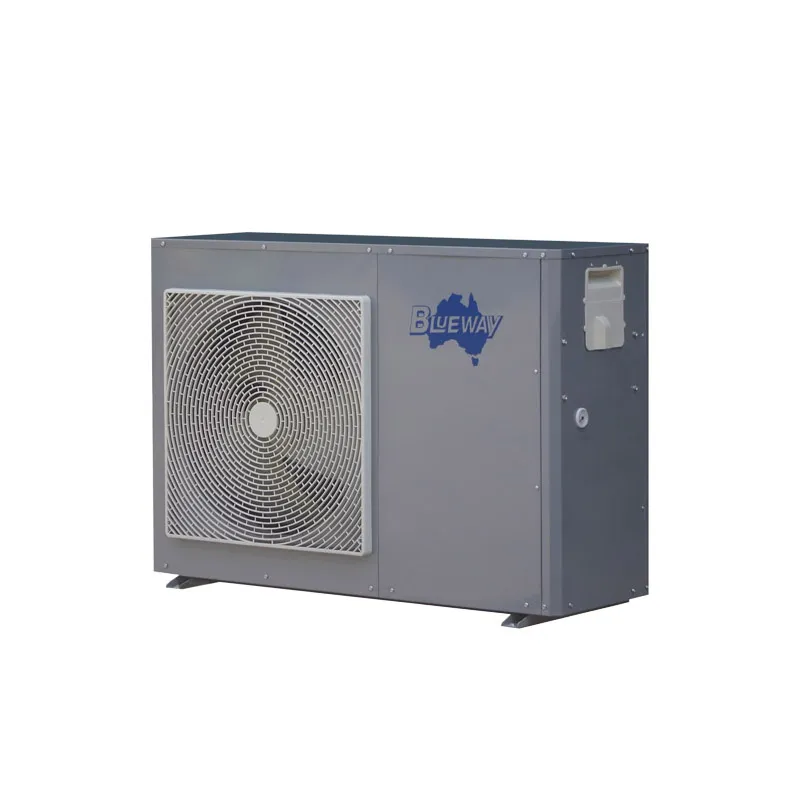
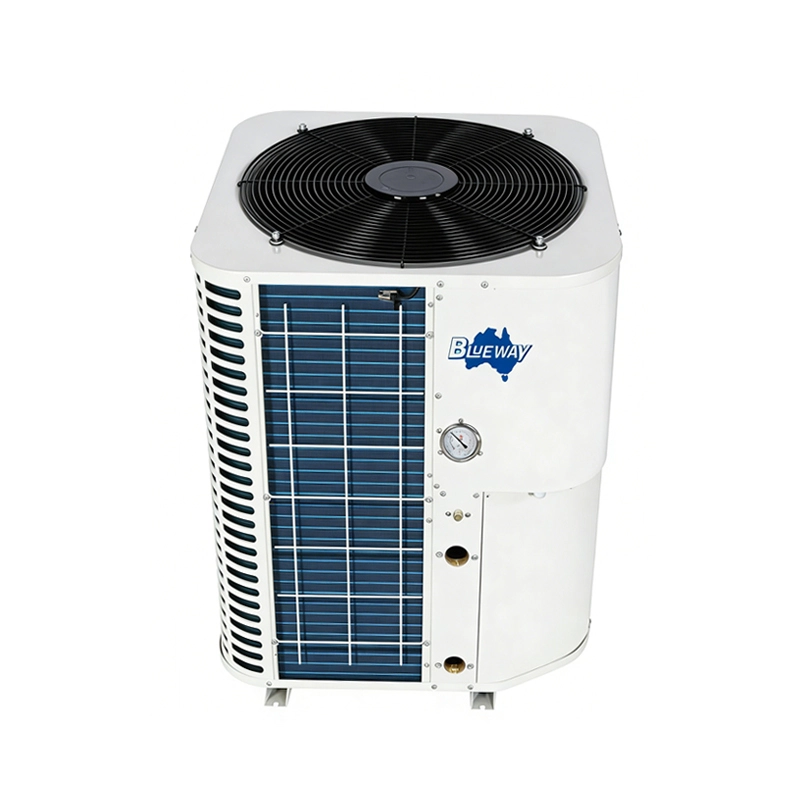
A commercial air cooled water chiller is a refrigeration-based cooling system designed to remove heat from water and provide a controlled supply of chilled water for commercial facilities. Unlike water-cooled systems, it rejects heat directly to the surrounding air, eliminating the need for a cooling tower and associated condenser-water infrastructure.
For commercial projects, this configuration can simplify installation and reduce the amount of supporting equipment required. Blueway's BAWC series is designed for commercial applications and can be configured for challenging tropical environments where outdoor temperatures may reach approximately 53°C. The system can also be adapted for air-conditioning applications requiring lower outlet-water temperatures.
Typical applications include:
- Hotels and resorts
- Office towers and commercial buildings
- Schools and educational facilities
- Hospitals and healthcare buildings
- Factories and industrial facilities
- Villa groups and large residential developments
- Engineering projects requiring centralized chilled-water systems
For project planners looking for a commercial cooling solution, you can also explore the air cooled water chiller range to compare different system configurations.
How Does a Commercial Air Cooled Water Chiller Work?
The operating principle is based on transferring heat from the water circuit to the refrigerant circuit and ultimately releasing that heat into the surrounding air.
- Water enters the heat exchanger: Warm water flows through the water-side circuit.
- Heat is absorbed: Refrigerant absorbs heat from the water through the heat exchanger.
- Refrigerant compression: The compressor raises the refrigerant pressure and temperature.
- Heat rejection: The condenser coil transfers heat from the refrigerant to outdoor air.
- Expansion: The throttling or expansion device reduces refrigerant pressure.
- Continuous cooling: The refrigerant returns to the heat exchanger and the cycle repeats.
This combination of refrigerant and water circuits allows the system to maintain a controlled chilled-water supply while continuously removing heat from the building or water application.
What Are the Key Components?
The performance of a commercial chiller depends heavily on the quality and coordination of its major components. A well-engineered system balances heat-transfer efficiency, compressor performance, control accuracy, safety, and maintainability.
| Component | Primary Function | Commercial Value |
|---|---|---|
| Compressor | Circulates and compresses refrigerant | Supports stable and efficient cooling |
| Condenser Coil | Rejects refrigerant heat to outdoor air | Essential for high-ambient operation |
| Plate Heat Exchanger | Transfers heat between water and refrigerant | Provides high thermal efficiency and compact design |
| Water Pump | Circulates chilled water | Maintains reliable water flow |
| Expansion Device | Controls refrigerant pressure and flow | Improves system control and stability |
| Microprocessor Controller | Monitors and controls system operation | Improves temperature management and protection |
| Safety Protection System | Detects abnormal operating conditions | Helps protect equipment and reduce downtime |
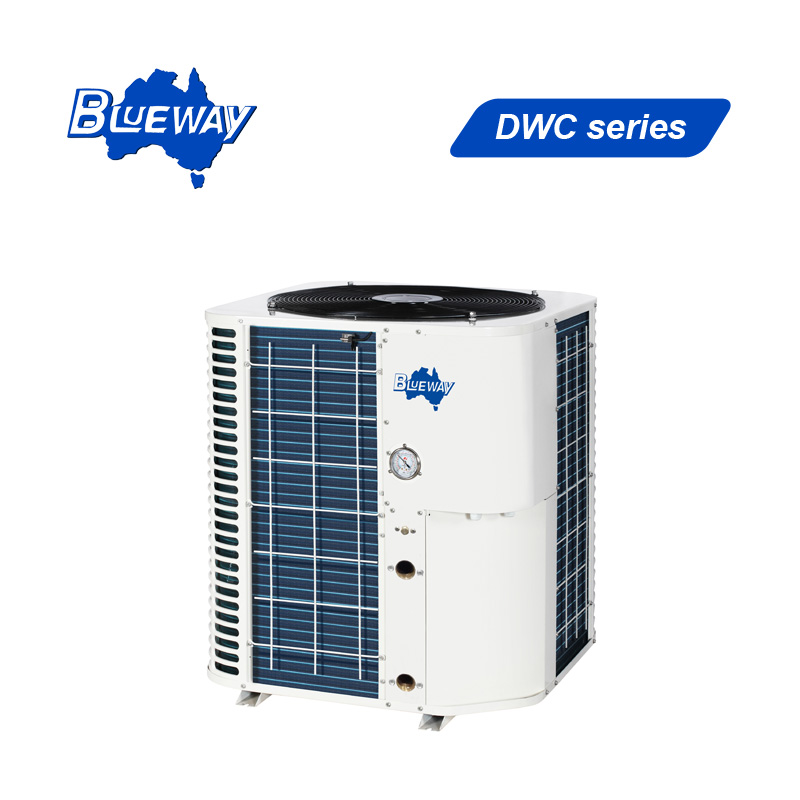
Blueway's commercial systems use fin-and-tube heat-transfer technology, hydrophilic-treated aluminum fins, inner-grooved copper tubes, intelligent digital controls, and optional circulation-pump configurations. The design also incorporates protective functions such as high- and low-pressure protection, compressor overload protection, water-flow protection, phase-failure protection, and anti-freezing protection.
What Are the Main Advantages?
1. Designed for High Ambient Temperatures
Commercial facilities in Gulf and tropical regions face a major challenge: conventional cooling equipment may experience reduced performance when outdoor temperatures become extremely high. A tropical-oriented chiller design can provide greater operational confidence under these conditions.
2. Efficient Heat Transfer
High-quality heat exchangers and optimized condenser coils help improve the transfer of thermal energy. Efficient heat exchange is important because it directly influences cooling performance and operating costs.
3. Intelligent Control
A microprocessor-based controller with a digital display can monitor operating conditions and provide accurate temperature management. Interfaces such as RS485 can also support integration into centralized building control systems where required.
4. Flexible Installation
Air-cooled systems do not require a cooling tower or condenser-water loop. This can be particularly valuable where installation space, water availability, or infrastructure complexity is a concern.
5. Modular and Customized Solutions
Large commercial projects may require different cooling capacities or multiple chiller modules. Modular configurations can provide greater flexibility for engineering projects, transportation, installation, and future capacity planning.
Where Can Commercial Air Cooled Water Chillers Be Used?
The versatility of a commercial air cooled water chiller makes it suitable for a broad range of facilities. The correct configuration depends on the required water temperature, cooling capacity, ambient conditions, operating schedule, and project design.
- Hotels: Supports chilled-water requirements for guest facilities and centralized cooling applications.
- Office Towers: Provides a centralized cooling source for large occupied spaces.
- Hospitals: Helps maintain stable cooling conditions for demanding healthcare environments.
- Schools: Offers centralized temperature-control capability for educational buildings.
- Factories: Can support process-related or facility cooling requirements.
- Residential Developments: Suitable for villa groups and large-scale residential projects.
- Engineering Projects: Modular configurations can be incorporated into customized HVAC designs.
In tropical Gulf applications, air-cooled water chillers can also be used to cool rooftop tank water for applications such as bathrooms, kitchens, laundry, and other domestic water needs, provided the system is appropriately designed for the intended water application.
How Should You Select the Right Chiller?
Choosing a commercial chiller should involve more than comparing the purchase price. Engineering teams and procurement managers should evaluate the complete operating environment and lifecycle requirements.
- Determine cooling capacity: Calculate the actual cooling load rather than selecting equipment solely by building size.
- Define entering and leaving water temperatures: Different applications require different chilled-water temperature ranges.
- Check ambient conditions: High-temperature regions require equipment specifically engineered for high outdoor temperatures.
- Review power requirements: Confirm voltage, frequency, phase, and electrical capacity before ordering.
- Evaluate controls: Check whether RS485, centralized control, or other communication functions are required.
- Consider maintenance access: Equipment layout should allow technicians to inspect coils, pumps, electrical components, and refrigeration components.
- Discuss customization: For large engineering projects, OEM or customized solutions may provide a better fit than standard equipment.
Commercial Air Cooled Water Chiller Selection Factors
| Selection Factor | What Buyers Should Check | Why It Matters |
|---|---|---|
| Cooling Capacity | Required cooling load and peak demand | Prevents undersizing or unnecessary oversizing |
| Ambient Temperature | Maximum outdoor design temperature | Determines suitability for hot climates |
| Outlet Water Temperature | Application-specific temperature requirement | Ensures the chiller matches the end use |
| Control System | Digital controller and communication interface | Supports precise operation and centralized management |
| Installation | Available space, airflow, and service clearance | Influences installation efficiency and maintenance |
| Service | Component accessibility and supplier support | Helps reduce long-term downtime |
How Can You Improve Chiller Reliability and Service Life?
Even a high-performance chiller requires appropriate operation and maintenance. Facility managers can improve long-term reliability by establishing a preventive maintenance program.
- Keep condenser coils clean and free from excessive dust or debris.
- Check water flow and pump operating conditions regularly.
- Monitor refrigerant-side operating parameters.
- Inspect electrical connections and protection devices.
- Check for abnormal noise, vibration, or temperature fluctuations.
- Maintain adequate airflow around the air-cooled condenser.
- Review controller alarms and operating records.
- Schedule professional inspection according to the equipment and project requirements.
For commercial installations, preventive maintenance is especially important because unexpected cooling-system downtime can affect building comfort, production schedules, occupant safety, and operating costs.
Frequently Asked Questions
What is the main difference between an air-cooled and water-cooled chiller?
An air-cooled chiller rejects heat directly to outdoor air, while a water-cooled chiller normally uses condenser water and a cooling tower. Air-cooled designs can simplify infrastructure because they do not require a cooling tower or condenser-water circuit.
Can a Commercial Air Cooled Water Chiller operate in very hot climates?
Yes. Chiller selection must account for the maximum outdoor design temperature. Blueway's tropical-oriented commercial chiller designs are intended for high-ambient conditions and can be designed for operation in environments reaching approximately 53°C.
Can the chiller provide water at 7°C?
Yes, Blueway states that it can provide a different chiller design for air-conditioning applications with outlet water temperatures down to approximately 7°C. Domestic chilled-water applications use a different design and should not be treated as identical configurations.
Can a commercial chiller be customized for 60Hz power?
Yes. Blueway indicates that 60Hz configurations can be provided, although cost and compressor options may differ from standard 50Hz configurations. Project electrical requirements should be confirmed before production.
Can large commercial chillers be shipped internationally?
Large systems can be designed with transportation and container loading considerations in mind. Buyers should provide the desired model, quantity, destination, and project requirements so the manufacturer can prepare an appropriate loading and shipping plan.
Conclusion
A well-designed Commercial Air Cooled Water Chiller can provide an effective combination of reliable cooling, intelligent control, installation flexibility, and high-ambient performance for modern commercial facilities. For projects in demanding climates, choosing a system designed around actual operating conditions is particularly important. Blueway's commercial chiller solutions combine tropical-oriented engineering, efficient heat-transfer components, intelligent controls, safety protection, and scalable configurations to address a variety of commercial cooling requirements. If you are planning a hotel, office, hospital, factory, school, or large HVAC engineering project, explore Blueway's Commercial Air Cooled Water Chiller solutions and contact us for technical consultation, configuration recommendations, and a project-specific quotation.